Nursery Essentials South Africa: A Safe, Stylish Space on Any Budget
Nursery Essentials in South Africa: A Safe, Budget-Friendly Guide
For nursery essentials South Africa, the short answer is that a safe nursery needs surprisingly little. You need a cot that meets safety standards with a firm, well-fitting mattress, a sensible spot for nappy changes, and a few practical pieces for feeding and storage. Everything else is a bonus. Start with the essentials, upgrade where it matters to you, and use a baby registry to let family and friends help pay for the rest from local South African brands.
I'm Emma, and if you're staring at a Pinterest board right now feeling slightly panicked, take a breath. Your baby will not care about the matching cushions. They'll care about being fed, warm, safe and held. So let's walk through nursery essentials in South Africa the way I'd explain it over coffee: what you truly need, what's nice to have, what can wait, and how to put a nursery together at any budget.
What nursery items are actually essential?
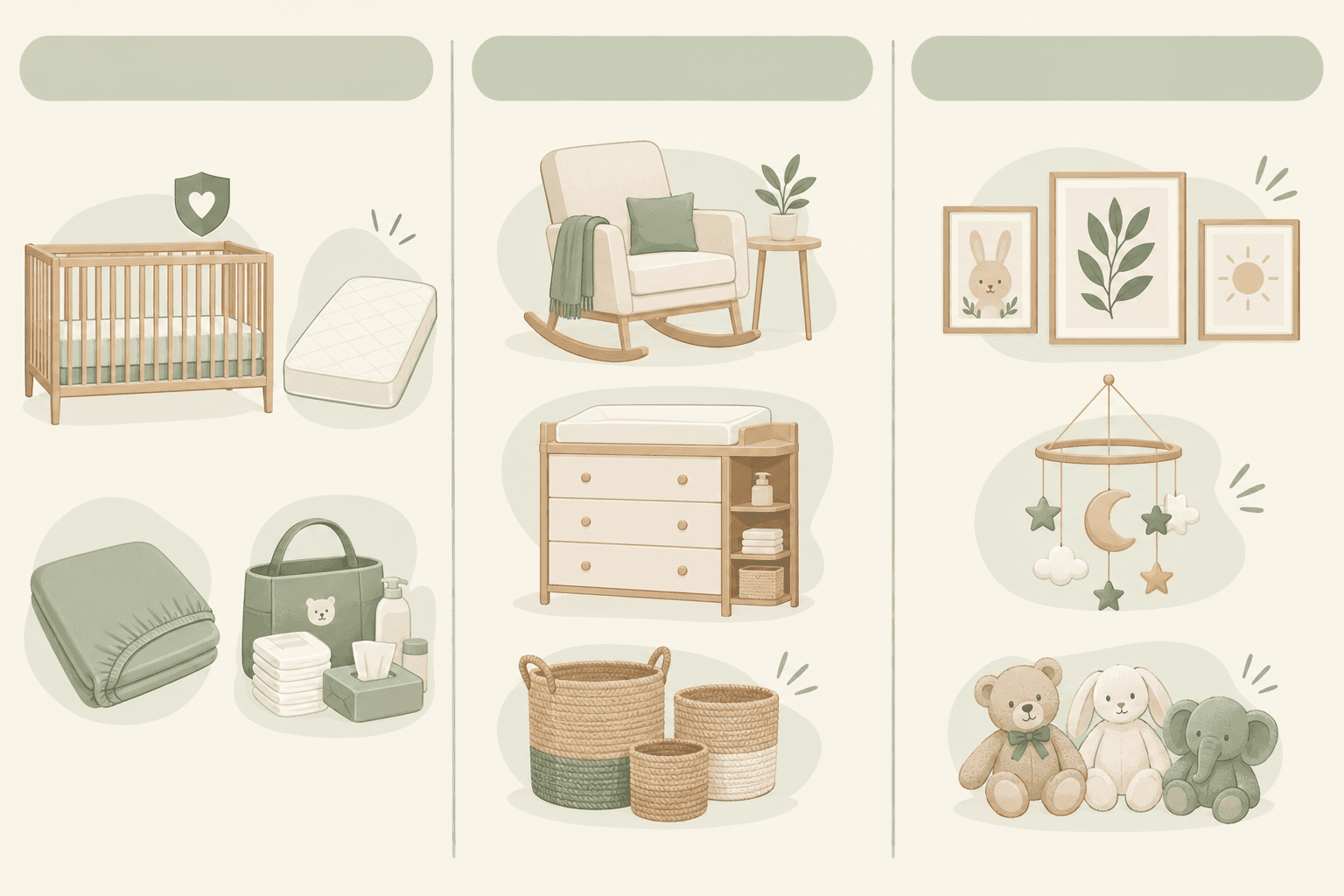
I like to sort everything into three piles before spending a single rand.
Need now: essential nursery items
- A cot or bassinet that meets safety requirements.
- A firm mattress that fits snugly, plus two or three fitted sheets.
- A changing spot. A changing mat on a stable surface is plenty.
- Basic storage for clothes, nappies and newborn essentials.
- Soft, dimmable lighting for night feeds, so you're not waking everyone with the main light.
Nice-to-have nursery items
- A nursing or feeding chair (your back will thank you, but a comfy chair you already own works too)
- Blackout blinds
- A mobile or wall art
- Matching décor sets
Nursery purchases that can wait
Many parents only find out what they need after meeting their baby. Extra storage, specialised gadgets, a second changing station, that clever device someone swore by: you'll know within a few weeks whether you actually need any of it.
Let me tell you about a mom I'll call Lindiwe (she's a composite of a few parents I've chatted to). At 30 weeks she bought everything: the full furniture suite, a gadget for every scenario, and enough décor to style a magazine shoot. Six weeks after the birth, she was returning about half of it. The baby slept in a bassinet next to her bed for months, and the fancy changing unit never got used because the bed was easier at 3 a.m.
The lesson isn't to buy nothing. Buy the essentials and leave room for real life to tell you the rest. This is where a baby registry earns its keep. You can add the wait-and-see items to it and include them later, if you end up needing them.
Nursery essentials South Africa: safety non-negotiables
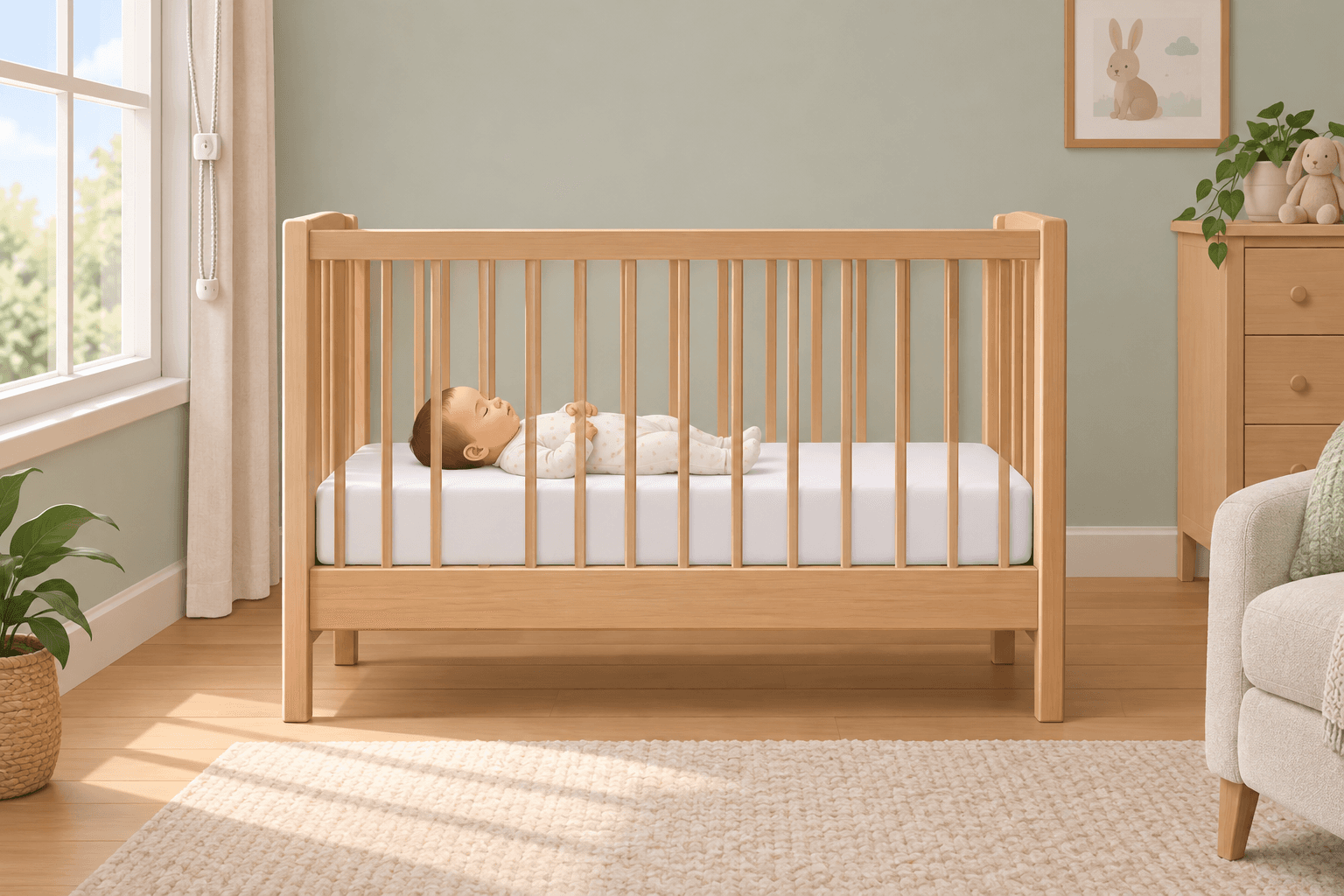
This is the part I never want you to skim. The good news is that safety is mostly about checking the right things, not spending more. Here's your checklist, in the order I'd tackle it.
-
Get the safe sleep basics right. Baby sleeps on their back, for every sleep including naps, on a firm, flat mattress, with only a fitted sheet. Keep the cot empty: no pillows, duvets, bumpers, heavy blankets, soft toys or sleep positioners. If you worry about cold, a correctly sized sleep sack is a better choice than loose blankets. These are recommendations from the American Academy of Pediatrics, not styling suggestions, and they're the reason that cute bedding set can stay off your list.
-
Inspect the cot itself. Look for sturdy construction, no sharp edges or protruding parts, and slats close enough together that a baby can't get stuck. Give it a gentle shake in the shop. It shouldn't wobble or rattle. Then check the mattress: there should be no gaps around the edges where little limbs could slip.
-
Ask about South African safety standards. Don't assume a cot is compliant just because it's on a local shelf, and be even more careful with imported products. Ask the retailer to show you the assembly instructions, the warranty, and evidence that the cot and mattress meet the applicable South African requirements or SANS standards. A good local baby store will be happy to answer. If they can't, that tells you something. The SABS website (sabs.co.za) and the Consumer Goods and Services Ombud (cgso.org.za) are useful places to read more. Also ask how they handle recalls and whether replacement parts are available.
-
Anchor your furniture. Tallboys, shelves and chests of drawers can tip once your baby starts pulling up and climbing. Fix them to the wall with proper hardware. It's cheap, it takes twenty minutes, and it's non-negotiable, especially if that dresser doubles as your changing table.
-
Think about cords and windows. Keep the cot well away from windows, curtains and blind cords. Choose cordless blinds or make sure cords are secured well out of reach. Keep lamps, heaters and electrical cables away from the cot too.
-
Mind the room environment. Aim for a comfortable temperature and good ventilation, and dress baby for the room rather than piling on layers. In South Africa, I'd add a load-shedding note: plan for outages with a rechargeable lamp or torch, not candles. Keep candles, paraffin appliances and portable heaters well away from the cot and fabrics.
-
Be sensible about second-hand nursery furniture. Second-hand dressers, shelves and chairs can be wonderful savings. For sleep items, be more careful. Older cots may be missing parts or may not meet current standards, and used mattresses can lose firmness or fit poorly. If you accept a hand-me-down cot, check that every part is there and undamaged, avoid improvised repairs, and buy a new mattress.
-
Choose your finishes wisely. Look for non-toxic paints and finishes, and let new furniture air out in a ventilated room for a while before baby arrives.
Notice what's not on this list: a premium price tag. A safe, compliant cot at an essential price beats an unchecked designer one every time.
How much should I spend on nursery furniture?
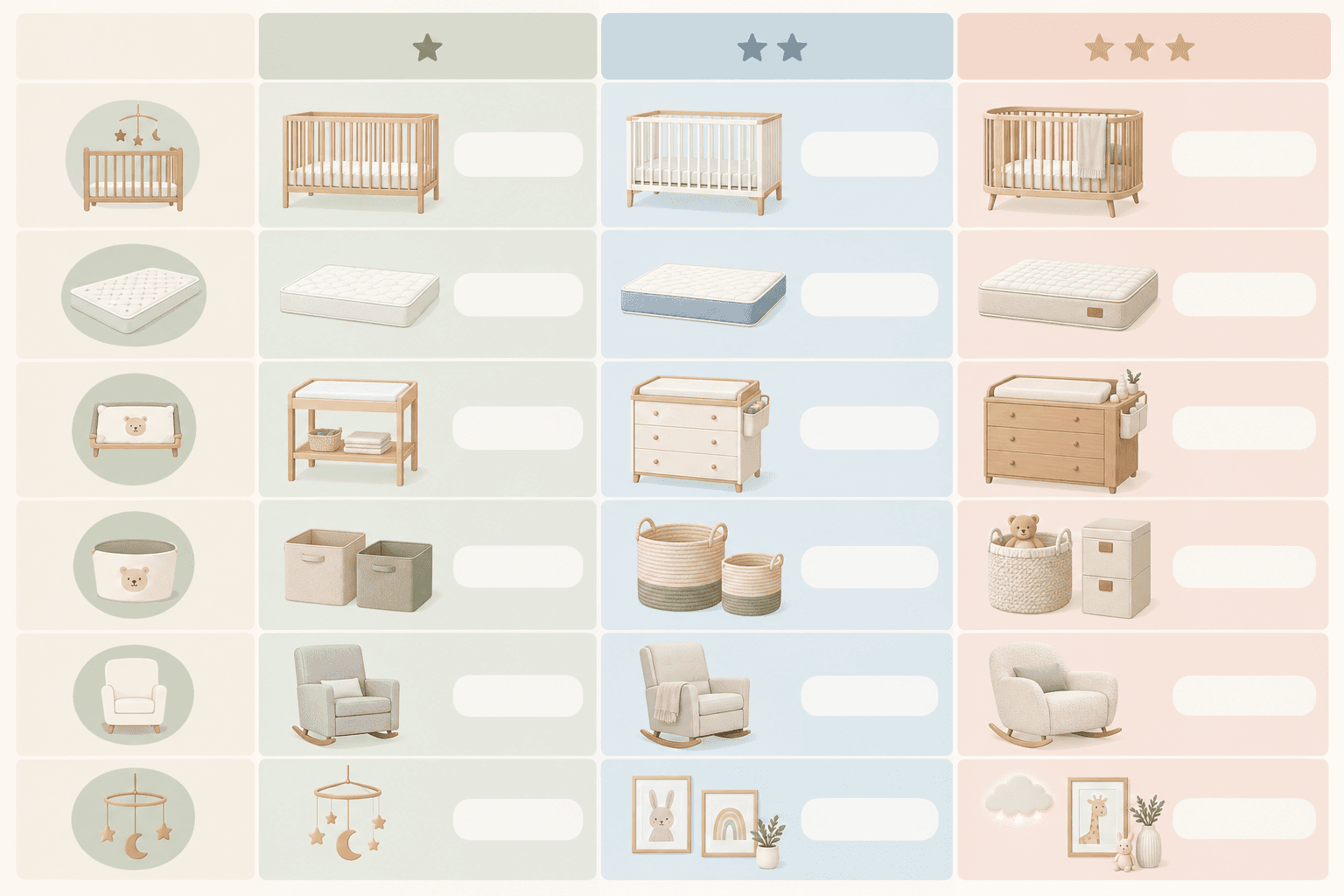
I think about nursery spending in three tiers: essential, mid-range and splurge. They describe priorities, not right or wrong. Essential means safety first and nothing extra. Mid-range adds better materials and practical comforts. Splurge is for the design, finishes or convenience you simply love.
Here's a rough guide to nursery furniture prices in South Africa. These Rand ranges are ballpark figures to help you plan, not quotes. Prices, delivery fees and stock change often, so check current listings at local baby stores before you set any targets, and compare the full delivered cost rather than the shelf price alone.
| Item | Essential | Mid-Range | Splurge |
|---|---|---|---|
| Cot | R1,500–R3,000 | R3,500–R6,500 | R7,000+ |
| Mattress | R600–R1,200 | R1,300–R2,500 | R2,500–R5,000 |
| Changing station | Mat on existing dresser (R150–R400) | Dresser or unit (R1,500–R3,500) | Bespoke or designer piece (R4,000+) |
| Storage | R200–R800 | R1,000–R3,000 | R3,500+ |
| Seating | Chair you already own | R2,000–R4,500 | R6,000+ |
| Décor | R0–R500 | R500–R1,500 | R2,000+ |
Where it's worth spending more on nursery essentials
The mattress is my first answer. The cot and mattress are the part of the budget I'd protect, along with anything you'll use every single day, like a comfortable chair or a sturdy changing setup. Save on décor before you compromise on the fit or condition of the sleep surface.
Where it's fine to save
Décor, anything baby will outgrow in a few months, and anything that's purely about matching. A nice print on the wall does the same job whether it cost R80 or R800.
Mixing price tiers is normal
The smartest nurseries are rarely all one tier. A mid-range cot with budget storage and a hand-me-down chair is a perfectly sensible combination. A splurge on a glider with a basic mat on an old dresser? Also fine.
Set a total nursery budget, then split it
Pick a total number based on your household cash flow. Then decide what you'll buy yourselves and what you'll invite guests to gift. Many parents buy the safety-critical items directly, such as the mattress and fitted sheets, and put the big-ticket furniture on a baby registry where relatives can chip in. VAT at 15% is already included in advertised retail prices, so use the price you actually see on screen.
Budget-friendly nursery furniture from local baby stores
So what does an essential nursery look like in practice? A simple, safety-compliant cot, a good mattress, and a changing mat on top of a dresser you already own (anchored to the wall, with one hand always on baby). That's a complete, safe setup. Nothing about it is second best.
Where to shop for affordable nursery essentials
- Local baby stores: Baby City and The Baby Shop are good places to compare cots, mattresses and basics, and Takealot is handy for price comparisons. Check current stock, delivery, assembly and returns directly with each.
- Small South African furniture makers: often more flexible on sizing and finishes than you'd expect.
- Trusted second-hand sources: great for dressers, shelves and chairs, but not for mattresses.
Smart budget swaps for a nursery
- A convertible cot that becomes a toddler bed, so you only buy once (just confirm it stays safe in every configuration and that the conversion kit is available)
- A dresser that doubles as a changing table
- Open shelving instead of a full wardrobe, which suits a baby's tiny clothes anyway
- A sleep sack instead of a stack of blankets
Where not to cut corners
The mattress, anything that touches baby's sleep space, and your wall anchoring hardware. These are small line items, but they matter a lot.
A practical tip: when you're comparing options across five different websites, things get lost. Screenshots pile up and links vanish. On your bababloom registry you can save picks as you browse, from many local stores in one place, so nothing ends up buried in a screenshot folder. Building the registry is free, so you can collect and compare for as long as you like.
Mid-range nursery essentials from South African brands
If essential is about safety and splurge is about treating yourself, mid-range is where many families land: better materials, nicer finishes and longer-lasting pieces, without the designer price tag.
What mid-range nursery furniture can offer
- A solid wood cot, ideally convertible, that will last through toddlerhood
- A better mattress that fits the cot properly and holds its firmness
- Natural-fibre bedding, like cotton fitted sheets, that's soft and breathes well
- A comfortable feeding chair you'll actually use for months of night feeds
- Sturdy, anchored storage that grows with your child
It's worth comparing specialist baby retailers like Baby City with broader home retailers like Woolworths and @home, especially for textiles, storage and accessories. Compare materials, safety information, warranties and delivery costs, not just the sticker price. Stock and delivery can also vary by province and town, so check before you fall in love with a big item.
Discover South African baby artisans
This is where I get a little excited. South Africa has plenty of baby artisans making handmade products with real character: hand-sewn cotton bedding, wooden toys, woven baskets, knitted blankets for the pram or sofa. These pieces add warmth to a room in a way that mass-produced matching sets rarely do. One or two of them can carry your whole nursery's personality.
A quick note, though: the same safety rules apply. A beautiful handmade blanket is lovely for cuddles or the pram, but it stays out of the cot.
Why buying local matters
- Shorter supply chains and fewer surprises on delivery
- You support small South African businesses and the people behind them
- It's easier to reach someone if something needs fixing, replacing or a quick question answered
I know a couple who chose a mid-range solid wood cot and paired it with a hand-carved wooden mobile from a local maker. The cot was the sensible purchase. The mobile was what visitors kept commenting on, and it cost less than a fancy imported décor set. Together they made the room feel like theirs.
These are exactly the kinds of items grandparents and close friends love to contribute towards. A baby registry lets them put their gift towards the cot or the chair, rather than guessing and buying a fifth set of baby grows.
Splurge-worthy nursery pieces: what may be worth the extra cost?
Let me be clear: splurging is optional, and it's definitely not a requirement for good parenting. If your budget stretches and something makes you smile every time you walk in, go for it. If not, your baby will be just as happy.
The pieces that tend to be worth it are the ones you'll use daily or for years. A quality glider or nursing chair makes a difference when you're sitting in it for hours. A statement cot, particularly a convertible one, spreads its cost over a long time. A high-quality natural mattress is arguably the most defensible splurge of all, because it's where baby spends the most time. And a bespoke artisan piece, like a custom-made shelf or hand-built toy storage, can become a family heirloom.
The pieces that are rarely worth it? Matching sets you'll outgrow, single-use gadgets, and trend-led décor that will look dated by the time your baby is walking.
My advice is to pick one hero piece rather than splurging on everything. That piece becomes the centre of the room, and everything else can stay simple.
Here's a baby registry trick: turn your splurge into a group gift. Instead of one person buying the whole glider, family can contribute together, and you get the piece you really want.
One honest reminder. Expensive doesn't automatically mean safer. Check safety credentials on premium items just as carefully as on budget ones. Ask for documentation of compliance with South African requirements, clear assembly instructions, warranty details and whether replacement parts are available. If you're buying a premium blackout blind, make sure it's cordless or has no accessible loops. And if you buy a feeding chair, remember it isn't a sleep space. If there's any chance you'll nod off, move baby to the cot first.
Styling a small nursery or baby corner
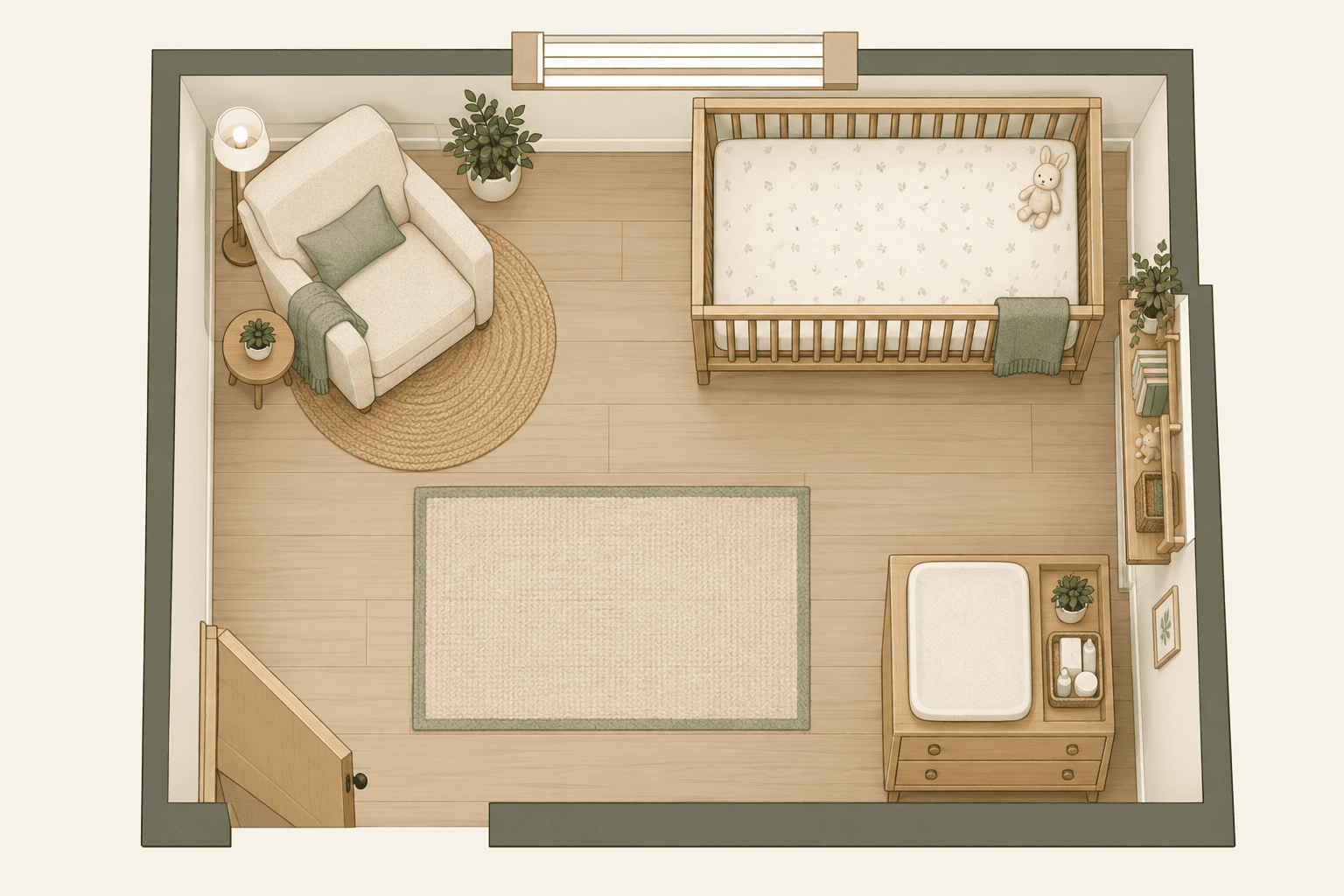
Not everyone has a spare room, and that's completely fine. Many parents keep baby in their room for the early months, and the AAP recommends room-sharing (without bed-sharing) because it may reduce the risk of sudden infant death. A compact nursery corner might be all you need.
- Use vertical space. Securely anchored wall shelves, hooks and hanging storage keep the floor clear.
- Choose multi-purpose pieces. A dresser-changer, an ottoman with storage, or a cot with built-in drawers all do double duty.
- Keep the palette calm. Pick two or three soft colours, then let one or two handmade pieces bring the personality.
- Plan for the night routine. You want a dim lamp, a comfortable place to sit, and a clear path from chair to cot.
- Sharing a room? Set up your nursery corner in the main bedroom and keep the sleep space uncluttered. The cot stays free of everything but a fitted sheet, and the clutter lives on the shelves.
- Renting? Removable wall decals, freestanding storage and fabric accents (like a woven basket or a soft rug) give you style without touching the paint.
And Emma's rule of thumb: if you have to squeeze past it at 3 a.m., it doesn't belong in the room. 😄
Create a baby registry for your nursery essentials
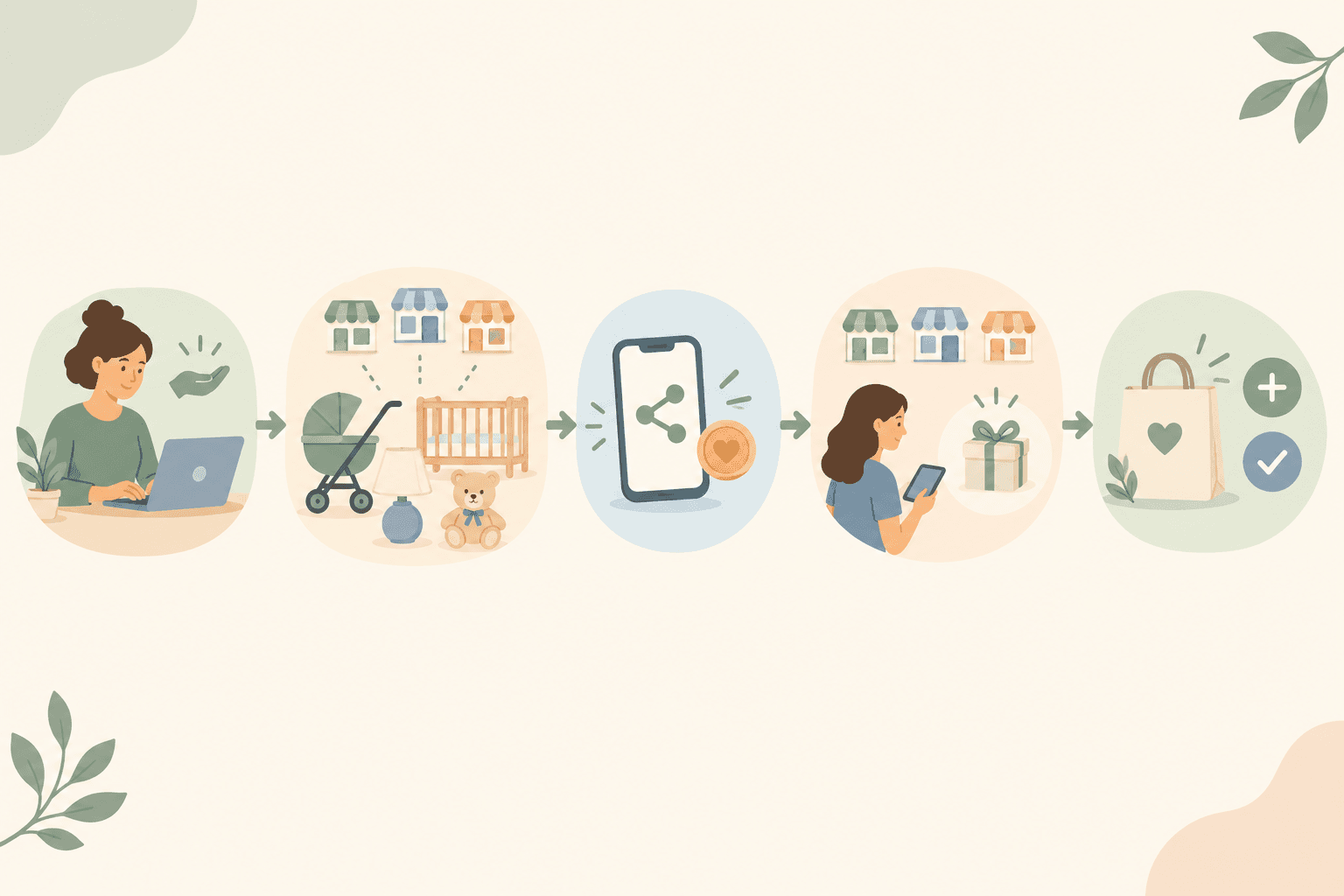
Once you know what you need, the next question is how to get it without juggling a dozen wish lists. That's why we built bababloom: one curated baby registry that brings local South African baby stores and artisans together in a single shareable place. Here's how I'd do it.
- Write your lists. Start with your must-haves, then your nice-to-haves, using the three tiers above.
- Build your registry for free. Add items from local South African baby stores and baby artisans in one place. Take your time. There's no charge to build.
- Mix your price points. Include small handmade pieces, mid-range basics and a few big-ticket furniture items so guests on any budget can contribute.
- Pay once, when you're ready to share. It's a one-time fee of R199, and then you can send your link to family and friends.
- Let guests buy from the retailer. Guests check out on each retailer's own website, so it feels familiar and secure, and duplicate gifts are avoided.
If you're wondering how varied a single registry can be, have a look at our live example registry. It has 102 gifts from 31 stores, everything from nursery furniture to handmade treasures, all behind one link.
A baby shower gift that gives back
There's one more thing I love about bababloom. Through our partnership with the Hatch Foundation, your guests can also donate a R500 Hatch Bag of newborn essentials to a mother who needs it, in communities across South Africa. If guests want to give something meaningful alongside a baby shower gift, it's a lovely option, and it means your celebration helps another family start out with the basics too.
FAQs about nursery setup in South Africa
What nursery items are actually essential?
The essentials are a safe cot or sleep space with a firm, well-fitting mattress and fitted sheets, somewhere safe to change nappies, and basic storage for clothes and newborn essentials. A dim light for night feeds and a comfortable place to sit help a lot too. Everything else, from mobiles to matching décor, can wait.
How much should I spend on nursery furniture?
There is no single right number. Many parents set a total nursery budget and then decide which tier (essential, mid-range or splurge) each item belongs in. Spend where safety and daily use matter most, such as the mattress and cot, and save on décor. A baby registry can also shift some of the cost to gifts from loved ones.
Are there local brands for affordable cots?
Yes. South Africa has local baby stores and small furniture makers offering cots at different price points, including convertible styles that last into toddlerhood. Always ask about safety compliance, slat spacing and mattress fit before buying, and compare current prices across a few retailers.
Is it safe to buy a second-hand cot or mattress?
Second-hand furniture like dressers, shelves and chairs can be a great saving. For sleep items, be more cautious. Older cots may not meet current safety standards or may have missing parts, and used mattresses can lose firmness or fit poorly. If you do accept a second-hand cot, check it thoroughly and consider buying a new mattress.
Do I need a nursery if baby will sleep in our room?
Not at all. Many parents keep baby in their room for the early months. You can create a simple baby corner with a safe sleep space, a changing spot and a little storage, then add more later if you want to.
When should I start setting up the nursery and building my baby registry?
Many parents start planning in the second trimester and aim to have the main safety items in place a few weeks before the due date. You can start building your bababloom registry for free at any time and only pay the R199 fee when you're ready to share it.
A final word on nursery essentials
Your nursery doesn't need to be perfect. It needs to be safe, practical and a place where you feel calm at 3 a.m. Start with the essentials, add what suits your family, and let the people who love you help with the rest. When you're ready, start your free bababloom registry and gather your favourite local finds in one place. You've got this. 💛
Baba Bloom Team
Author