Summer Baby Essentials in South Africa: A Guide to Sun, Heat and Sleep
Baba Bloom Team19 November 202616 min read
<h2>Summer Baby Essentials: What to Dress, Pack and Register For (and What Can Wait)</h2>
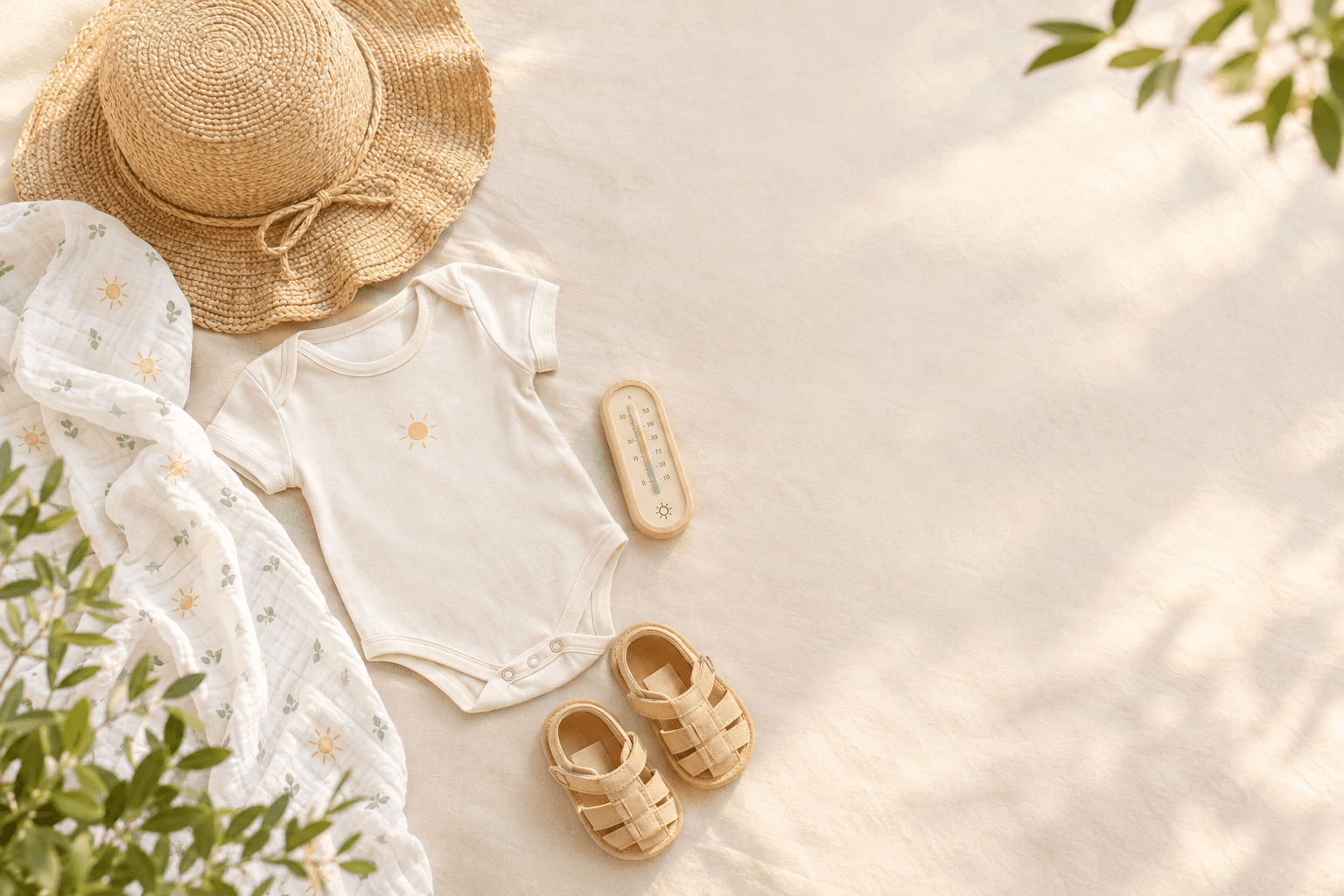
<p>If you're heading into summer with a baby, here's the short version. You need very little: breathable clothes, shade, a cool sleep space and a few muslins. Buy those first and let the beach gear wait. The rest of this guide explains why, so you can choose calmly and skip the panic buys. ☀️</p>
<p>Here's the plan at a glance:</p>
<ul>
<li>Buy now: lightweight bodysuits and sleepsuits, a securely fitting sun hat, a room thermometer, blackout blinds, a summer-weight sleeping bag, a pram sunshade that fits your pushchair, and a few muslins.</li>
<li>Use with care: sunscreen, fans and clip-on pram fans. Each has rules, which we'll cover below.</li>
<li>Wait: swimwear, UV tents, sandals and larger beach gear. A newborn won't need them yet.</li>
</ul>
<h2>What a Hot Summer Means for Your Baby</h2>
<p>Picture this. It's the first properly hot afternoon of the season, the thermometer is creeping past 28°C, and you've just brought your newborn home. You open the wardrobe and realise everything in it is a fleecy sleepsuit or a tiny knitted cardigan, all lovingly gifted and all completely wrong for the weather. I think most of us have a version of that moment.</p>
<p>Babies overheat more easily than adults. They can't regulate their body temperature as well as we can, and they can't tell us they're too hot. The NHS and the UK Health Security Agency (UKHSA) both note that babies and young children are more vulnerable in hot weather, so the noticing falls to us. Read the <a href="https://www.nhs.uk/live-well/seasonal-health/how-to-cope-in-hot-weather/">NHS hot weather advice</a> before the first heatwave arrives.</p>
<p>Keep an eye out for these signs of overheating:</p>
<ul>
<li>Flushed or red skin</li>
<li>Damp or sweaty hair</li>
<li>Fast breathing</li>
<li>Unusual fussiness, or being unusually sleepy and hard to rouse</li>
</ul>
<p>If your baby seems unwell, or you're worried about the heat, contact your health visitor, GP or NHS 111. Please don't wait it out.</p>
<p>UK heat has its own quirks. Many homes are built to hold warmth in and air conditioning is rare, so top-floor bedrooms can stay stuffy long after sunset. UV can also be high on days that feel mild or cloudy, so check the UV forecast (the Met Office publishes one) as well as the temperature.</p>
<h2>Dressing Your Baby for Heat: Best Fabrics and Layers</h2>
<p>The fabric against your baby's skin matters more than the cute factor. Light, loose, breathable clothing lets air move and sweat evaporate. Heavy or tight layers trap heat.</p>
<p>Here's a quick guide to the usual suspects. Treat it as a starting point rather than a promise. How a fabric performs depends on the weave, the thickness, the blend and your own baby's skin, so the care label is always worth a read.</p>
<table>
<thead>
<tr>
<th>Fabric</th>
<th>Typical breathability</th>
<th>Softness</th>
<th>Easy care</th>
<th>What to check</th>
</tr>
</thead>
<tbody><tr>
<td>Cotton</td>
<td>Good, especially in light weaves</td>
<td>Soft, often softer with washing</td>
<td>Usually machine washable</td>
<td>Weight of the knit, flat or soft seams</td>
</tr>
<tr>
<td>Muslin (cotton)</td>
<td>Very good thanks to its loose, airy weave</td>
<td>Gentle, gets fluffier</td>
<td>Usually dries quickly</td>
<td>Fibre content, and whether it's a true loose weave</td>
</tr>
<tr>
<td>Linen</td>
<td>Very good</td>
<td>Crisp at first, softens with washing</td>
<td>Easy, but wrinkles</td>
<td>Can feel scratchy when new, so wash before first wear</td>
</tr>
<tr>
<td>Bamboo blend</td>
<td>Varies by blend and knit</td>
<td>Very soft</td>
<td>Check the label</td>
<td>The blend: how much is bamboo-derived fibre and what it's mixed with</td>
</tr>
<tr>
<td>Synthetics</td>
<td>Varies; many lightweight knits can trap heat</td>
<td>Varies</td>
<td>Usually easy</td>
<td>Avoid thick or tight knits in the heat</td>
</tr>
</tbody></table>
<p><img src="https://www.usescribe.io/public-assets/blog-images/internal/summer-baby-essentials-in-south-africa-sun-heat-and-sleep-tips/218c9595-3e81-4cc2-8dc9-0ddd79dd2262.png" alt="Comparison: Clean comparison table graphic rating cotton, muslin, linen, bamboo blend and synthetics on breathability, softness, easy care and suitability for sensitive skin, using soft pastel colours and simple icons, with clear legible labels for Summer Baby Essentials in South Africa: Sun, Heat and Sleep Tips"></p>
<h3>How many layers should a baby wear in hot weather?</h3>
<p>The most common summer mistake isn't buying the wrong thing. It's overdressing. A handy rule of thumb in safe sleep guidance is to dress your baby in no more than one extra layer than you'd find comfortable yourself. If you're in a T-shirt and feeling warm, your baby doesn't need a jacket on top of a sleepsuit.</p>
<p>The best check is to feel your baby's chest or the back of their neck. Hands and feet often feel cool even when baby is perfectly comfortable, so they're unreliable. If the chest or back feels hot or sweaty, take a layer off.</p>
<h3>Summer baby wardrobe essentials</h3>
<p>For a hot-weather wardrobe, you really only need:</p>
<ul>
<li>Several short-sleeve and sleeveless bodysuits (your daytime base)</li>
<li>A couple of light sleepsuits, or lightweight long-sleeved pieces for sun cover</li>
<li>A few muslins, used as burp cloths, wipe-ups, a changing-mat layer or something to shade <em>your own</em> shoulder during a feed</li>
<li>A soft cotton sun hat that fits securely</li>
</ul>
<p>A quick but important note on muslins. Please don't drape one over your baby, the pram or the cot, including for a nap in the shade. It restricts airflow and can make the space hotter. A baby napping in a pram should have their face visible and the air moving freely around them.</p>
<p>Babies go through outfits quickly, but they don't need dozens. A handful of lightweight pieces on repeat is plenty.</p>
<h3>Choosing handmade and independent baby clothes</h3>
<p>Independent UK makers produce lovely cotton and linen bodysuits, muslins and sun hats, often in small runs, and one or two special pieces among the everyday basics can be a real treat. Small makers vary, though, so here's what I'd look for before buying:</p>
<ul>
<li>Fibre composition stated clearly, plus washing instructions you can actually follow with a baby's laundry load.</li>
<li>Soft, flat seams and no scratchy labels at the neck.</li>
<li>Nothing that can come loose. That means no beads, fragile-looking buttons, long ribbons or drawstrings, especially on hats and anything baby sleeps in.</li>
<li>Safety information for nightwear. Children's nightwear in the UK has flammability rules, so ask the maker about labelling and testing before buying sleepwear.</li>
<li>A hat that fits securely, with a soft chin strap or tie that doesn't dig in, a wide brim, and a size guide you can measure against.</li>
<li>A clear sizing chart and returns policy, since babies change size so fast.</li>
</ul>
<p>A UK craft fair, a local baby boutique or a maker's own website are all good places to start. If you can't find the answers above, that tells you something too.</p>
<h2>Sun Protection for Babies: Can Newborns Wear Sunscreen?</h2>
<p>The short answer is that the NHS advises keeping babies under six months out of direct strong sunlight, so shade and clothing come first. The full guidance is on the <a href="https://www.nhs.uk/live-well/seasonal-health/sunscreen-and-sun-safety/">NHS sunscreen and sun safety page</a>. Check it for updates now and then, because recommendations can change.</p>
<h3>Sun protection for babies under six months</h3>
<ul>
<li>Shade first. Keep your baby out of direct sun, especially around the middle of the day.</li>
<li>Cover up with light, loose clothing over arms and legs, and a wide-brimmed hat.</li>
<li>If some exposure is unavoidable, use shade and clothing to cover as much skin as possible, and ask your health visitor, pharmacist or GP what, if anything, is suitable for the small areas still exposed. Newborn skin is delicate, so get advice for your own baby rather than reaching for whatever is on the shelf.</li>
</ul>
<h3>Sun protection for babies over six months</h3>
<ul>
<li>The NHS recommends at least SPF 30 with a high UVA rating (look for four or five stars, or the UVA logo in a circle).</li>
<li>Mineral formulas (zinc oxide or titanium dioxide) are often a gentle option, but every baby's skin is different.</li>
<li>Patch-test on a small area first, and reapply as the label says, especially after sweating or water play.</li>
<li>Sunscreen is an extra layer of protection. It's not a reason to stay out longer.</li>
</ul>
<h3>Summer sun protection essentials</h3>
<ul>
<li>A wide-brimmed hat that stays on (a chin strap helps)</li>
<li>UPF-rated or tightly woven lightweight clothing</li>
<li>Car window shades</li>
<li>A pram sunshade or parasol designed for your pushchair</li>
</ul>
<p>When you're choosing a pram sunshade or parasol, check that:</p>
<ul>
<li>It's made for your pushchair model, or at least attaches securely to it without wobbling.</li>
<li>It sits clear of your baby and doesn't press on the hood or cut off airflow.</li>
<li>It has a UPF rating or a clear sun-protection claim.</li>
<li>You can still see your baby's face easily, and it doesn't block your view of them.</li>
<li>It folds down easily enough that you'll actually use it.</li>
</ul>
<p>The same goes for pram liners. Choose one designed for your pushchair, follow its instructions, and make sure it doesn't affect airflow or harness fit. Check on your baby often.</p>
<h3>When is the sun strongest in the UK?</h3>
<p>The NHS suggests keeping babies out of strong direct sun, particularly between 11am and 3pm during the UK summer, and taking extra care when the UV Index is 3 or higher. UV can get through on hazy or cloudy days, so don't be fooled by a bit of cloud. Plan walks for early morning or late afternoon where you can.</p>
<p>This is general information, not medical advice, so do chat with your health visitor or GP about your own baby's skin and needs.</p>
<h2>Keeping the Nursery Cool and Helping Baby Sleep in the Heat</h2>
<p>Hot nights are tough on everyone. A few simple steps go a long way.</p>
<p><img src="https://www.usescribe.io/public-assets/blog-images/internal/summer-baby-essentials-in-south-africa-sun-heat-and-sleep-tips/c0e71b04-58ae-4aa0-89b2-556b4abf3b22.png" alt="Diagram: Simple illustrated diagram of a cool, safe summer nursery: blackout blinds, a fan placed safely away from the cot, a room thermometer, an empty cot with a light sleeping bag and no loose bedding, with labelled callouts, gentle pastel style for Summer Baby Essentials in South Africa: Sun, Heat and Sleep Tips"></p>
<ol>
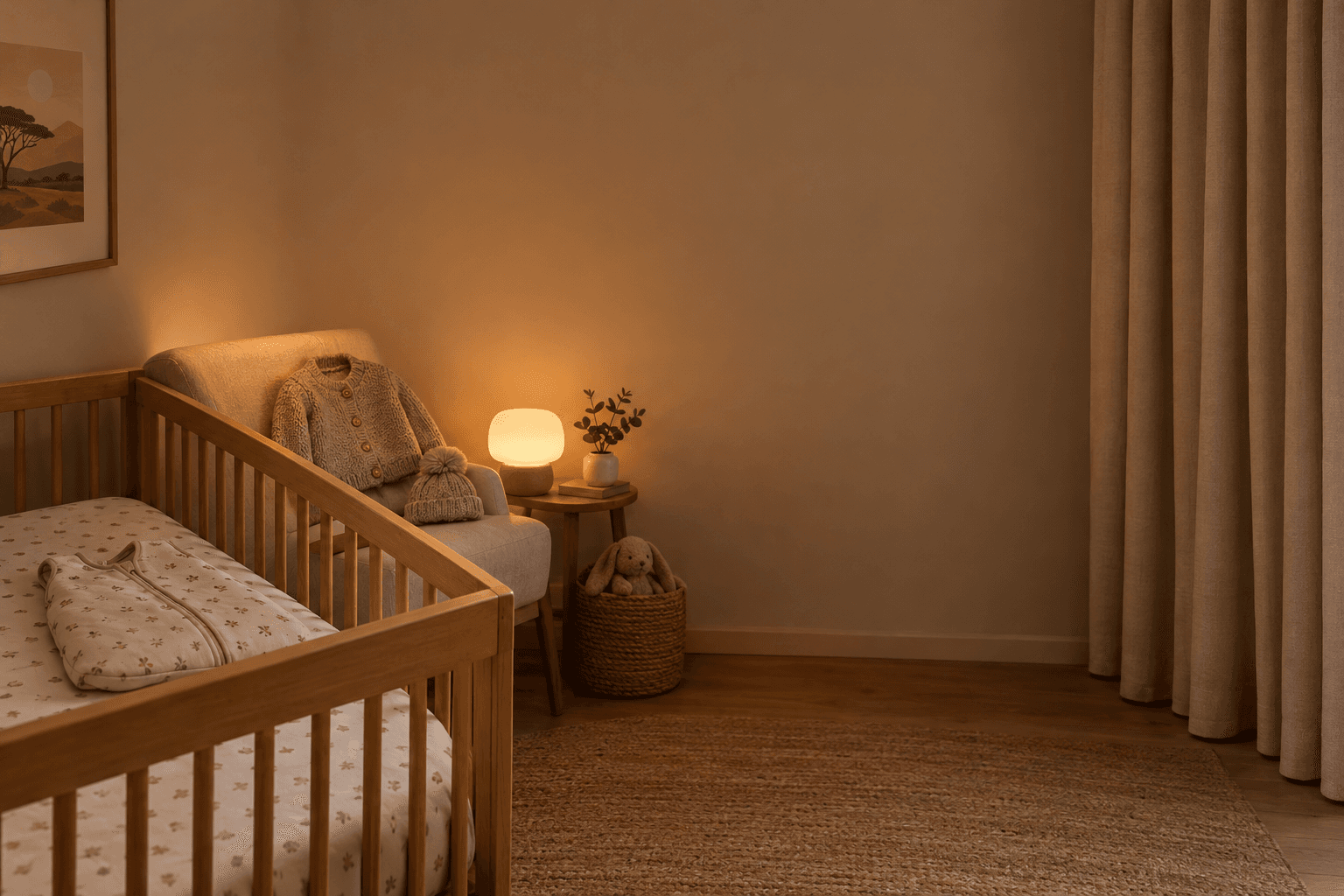
<li>Check the room temperature. A simple room thermometer takes the guesswork out. Safe sleep charity The Lullaby Trust suggests 16 to 20°C for a baby's sleep space (see their <a href="https://www.lullabytrust.org.uk/safer-sleep-advice/">safer sleep advice</a>). Treat that as guidance rather than a hard cut-off, because during a UK heatwave you may not get there. When you can't, let clothing and bedding do the work. Dress lighter rather than adding layers to chase a number.</li>
<li>Block the heat during the day. Blackout blinds or curtains help a lot. Keep windows shut during the hottest hours if it's cooler inside, then open them to air the room when the evening cools down.</li>
<li>Use a fan with care. A fan can help circulate air in the room, but don't point it directly at your baby, and keep it and its cable well out of reach.</li>
<li>Choose light sleepwear. A short-sleeve bodysuit, a light sleepsuit or a summer-weight sleeping bag is usually plenty. In very hot rooms, a nappy and bodysuit may be enough. Skip loose blankets and heavy swaddles, and don't use a hat indoors for sleep.</li>
<li>Check your baby properly. Feel the chest or the back of the neck. If it's hot or sweaty, remove a layer. Cool hands and feet are normal and don't mean baby is cold.</li>
<li>Stick to safe sleep basics. Put baby on their back on a firm, flat mattress with a clear cot: no pillows, duvets, bumpers, soft toys or loose blankets.</li>
</ol>
<h3>How to choose a summer-weight baby sleeping bag</h3>
<p>TOG is only part of the picture. When you're comparing sleeping bags, look for:</p>
<ul>
<li>The manufacturer's temperature and clothing chart, which tells you what to dress baby in underneath at each room temperature. Follow it over any general rule, since brands differ (a lower-TOG bag is often used in hot weather, commonly around 0.5 to 1.0, but check the label).</li>
<li>The right size, with a snug neck and armholes so baby can't slip down inside, and enough room at the bottom for the legs to move.</li>
<li>No hood, and no loose ties or trims.</li>
<li>Breathable, natural fabric such as cotton, and a zip that's easy to use for night changes.</li>
</ul>
<p>Be careful with cooling gadgets that haven't been designed and approved for unsupervised baby sleep. Cooling the room and lightening the layers is the safer route.</p>
<p>Some nights will still be hard. Babies wake in the heat, they wake when it's cool, and sometimes they just wake. If you're worried about your baby's temperature or how they seem, speak to a healthcare professional.</p>
<h2>Travel and Beach Day Essentials for Babies</h2>
<p>Most newborns won't be going to the beach in their first few weeks, so this section is mostly for later. It's still handy to know what to pack when the time comes.</p>
<h3>A realistic beach and holiday checklist</h3>
<ul>
<li>UV tent or beach shade (a windbreak helps on breezy UK beaches)</li>
<li>A sun hat with a chin strap</li>
<li>UPF swimwear</li>
<li>Swim nappies, plus ordinary nappies for travel and for after swimming. A swim nappy helps contain solids but isn't designed to absorb wee like a regular nappy</li>
<li>A towel, a changing mat, wipes and spare clothes</li>
<li>A plan for feeds, and water for older babies</li>
</ul>
<h3>Cooling and comfort on outings</h3>
<ul>
<li>A clip-on pram fan can take the edge off while you're walking. Keep it out of reach of little fingers, and don't rely on it instead of shade.</li>
<li>A cooler bag keeps expressed milk or prepared formula safely cool for feeds.</li>
</ul>
<h3>Keeping your baby hydrated in hot weather</h3>
<p>Breastfed babies under six months generally don't need extra water, even when it's hot. Offer more frequent feeds instead. For formula-fed babies, always make up feeds exactly as the tin instructs, and never dilute formula to stretch it. The NHS says babies can sometimes be offered a little cooled, boiled water in hot weather alongside their usual feeds, but it's best to check what's right for your baby with your health visitor or GP first. You can read more in the <a href="https://www.nhs.uk/conditions/baby/breastfeeding-and-bottle-feeding/bottle-feeding/">NHS bottle feeding guidance</a>. From around six months, small sips of water can come alongside solids.</p>
<h3>Keeping babies safe in the car during summer</h3>
<p>A window shade can make a big difference to the temperature in the back seat. Always check the seat and buckles before putting baby in, and <strong>never leave a baby in a parked car</strong>, not even for a minute. Cars heat up far faster than you'd expect.</p>
<h2>Summer Baby Registry: What to Register For and What to Buy Later</h2>
<p>Babies grow quickly, and what fits at three weeks won't fit at three months. Waiting on some items means you buy the right size and the right thing for the baby you actually have. Here's how I'd split it:</p>
<table>
<thead>
<tr>
<th>Register now (first weeks)</th>
<th>Buy later (around 3 to 6 months and beyond)</th>
</tr>
</thead>
<tbody><tr>
<td>Lightweight bodysuits and sleepsuits</td>
<td>Swimwear and UPF swimsuits</td>
</tr>
<tr>
<td>Muslins</td>
<td>UV beach tent</td>
</tr>
<tr>
<td>Sleeping bag in a summer weight</td>
<td>Sunscreen for older babies</td>
</tr>
<tr>
<td>Room thermometer</td>
<td>Sandals and shoes</td>
</tr>
<tr>
<td>Blackout blinds</td>
<td>Sippy cups</td>
</tr>
<tr>
<td>Newborn sun hat</td>
<td>Larger beach and pool accessories</td>
</tr>
<tr>
<td>Pram sunshade</td>
<td></td>
</tr>
</tbody></table>
<p><img src="https://www.usescribe.io/public-assets/blog-images/internal/summer-baby-essentials-in-south-africa-sun-heat-and-sleep-tips/0f134d2a-12dc-4ab2-8a4c-5575c86b0619.png" alt="Infographic: Two-column infographic titled 'Register Now' and 'Buy Later' listing summer baby items such as muslins, sleepsuits and sun hats on one side, and swimwear, UV tents and sunscreen on the other, with friendly icons and a warm, modern look for Summer Baby Essentials in South Africa: Sun, Heat and Sleep Tips"></p>
<h3>How to choose a summer baby registry</h3>
<p>A registry also helps your guests. Gifts are much easier to choose when people can see exactly what you need, and nobody ends up with five identical cardigans. If you're in the UK, here's what I'd check before committing to a registry service:</p>
<ul>
<li>Does it deliver to UK addresses and show prices in pounds?</li>
<li>Can you add items from several shops, including independent makers, rather than just one retailer?</li>
<li>How do returns and exchanges work if a gift arrives in the wrong size?</li>
<li>Is there a fee, for you or for your guests, and when is it charged?</li>
<li>Is it easy to share, and can guests buy without creating yet another account?</li>
</ul>
<p>Try mixing practical newborn essentials with a few special handmade pieces, so your list feels useful <em>and</em> a little bit joyful. Start it while your must-haves are fresh in your mind.</p>
<h2>Summer Baby Essentials: Key Takeaways</h2>
<ul>
<li>Choose light, loose, breathable fabrics, and check the label for weave and blend.</li>
<li>For babies under six months, put shade and clothing first, and ask your health visitor about sunscreen.</li>
<li>Keep the sleep space cool, dress baby lightly, never cover baby or pram with a muslin, and follow safe sleep guidance.</li>
<li>Register for newborn needs now and leave beach gear for later.</li>
<li>Guidance changes, so check the linked NHS and Lullaby Trust pages for the latest advice.</li>
</ul>
<p>You know your baby best, and a calm, prepared parent is the best essential of all. 💛</p>
<h2>Frequently Asked Questions About Summer Baby Essentials</h2>
<h3>What fabrics are best for babies in hot weather?</h3>
<p>Light, loose, breathable fabrics such as cotton, muslin and linen are reliable choices, and some bamboo blends work well too. Check the label and avoid thick or tight knits. See the <a href="#dressing-your-baby-for-heat-best-fabrics-and-layers">fabric guide</a> above for what to look for.</p>
<h3>Can newborns wear sunscreen?</h3>
<p>The NHS advises keeping babies under six months out of direct strong sun, so shade, hats and light clothing come first. If you can't avoid some exposure, ask your health visitor, pharmacist or GP what's suitable for your baby.</p>
<h3>How do I keep my baby cool at night?</h3>
<p>Keep the room as cool as you can, dress baby in light sleepwear or a summer-weight sleeping bag, and check their chest or the back of their neck rather than their hands. The nursery section above has the full checklist.</p>
<h3>What do I need for beach trips with a baby?</h3>
<p>Shade is the big one, ideally a UV tent, along with a wide-brimmed hat, UPF swimwear, swim nappies and a towel. For newborns, short outings in the shade are best, and most of this gear can wait.</p>
<h3>Which summer baby items should I put on my registry?</h3>
<p>Prioritise what you'll use in the first weeks: lightweight sleepwear, muslins, a sun hat, a pram sunshade and a room thermometer. The registry table above shows what can wait.</p>
<p><em>This guide is general information, not medical advice. Guidance from the NHS, UKHSA and The Lullaby Trust is updated from time to time, so please check the linked pages for current recommendations.</em></p>
B
Baba Bloom Team
Author