Budgeting for Baby: What SA Parents Really Spend in Year One (A Rand-by-Rand Guide)
Baby Budget South Africa: What the First Year Costs in Rand (and How a Registry Helps)
A sensible planning range for baby-related spending in South Africa's first year is R60,000 to R120,000. That assumes a household with a mix of new and second-hand gear and some paid childcare. It's a planning example built from the assumptions below, not a measured national average. It covers nursery, gear, feeding, nappies, clothing, out-of-pocket health costs and childcare. It leaves out medical scheme premiums, birth costs and lost income, so it isn't the full cost of a baby to your household. I'll show you how to add those in a moment.
Most of the money goes on recurring items like nappies, feeding and childcare, not on the nursery. A shared baby registry won't touch those monthly costs. But when friends and family buy the newborn essentials and gear you actually need, it can take a real bite out of your one-off spending. In the illustrative example later in this guide, that's roughly 23 to 39 percent of the early spend, or about 9 to 15 percent of the whole mid-range year.
Reading from the UK? Maybe you want to understand Rand prices before gifting to family in South Africa. This guide is for you too. Every figure is in Rand, and further down there's a short section for UK-based gift-givers, with rough pound conversions.
How much does a baby cost in the first year in South Africa?
Pull up a chair, because nobody gives you a straight number. Ask three mums and you'll get three answers, and each will be right for her own household. There's no official South African figure for first-year baby costs, so I've built these estimates from indicative local retail pricing and typical childcare rates. They're planning allowances, not a dated price survey.
Here's how I'd use them. Check the current shelf price of your usual nappy and formula brand, ask two or three local crèches or carers for quotes, and swap those into the tables. Those inputs, plus medical cover, move the total more than anything else.
Here's a three-tier snapshot of baby-related costs across the full first year, including childcare:
- Lean, roughly R23,000: public clinics, breastfeeding, plenty of hand-me-downs, and a grandparent or partner covering childcare.
- Mid-range, roughly R86,000: a mix of new and second-hand gear, some formula or feeding extras, part-time childcare or domestic help, and some private healthcare costs.
- Premium, roughly R165,000: mostly new gear, mostly formula, full-time crèche or nanny, and private care with co-payments.
The lean scenario only works if several things fall neatly into place. The premium one assumes you choose top-end options almost everywhere. Most households land somewhere in between, which is why R60,000 to R120,000 is a reasonable zone and why our mid-range column sits inside it. Your own figure could still fall outside it.
What these first-year baby budget estimates leave out
I want you to see this before you look at a single table, so here it is plainly. The totals exclude three things, and each can change your real first-year cost a lot:
- Medical scheme premiums. Take your monthly premium (including the extra for a dependant, if it applies) and multiply by 12.
- Birth costs. A public hospital, a private hospital with a scheme and a private hospital with co-payments are very different numbers. Ask your provider for a quote and note any shortfall.
- Lost income. If part of your leave is unpaid, multiply your monthly take-home pay by the unpaid months. For example, R20,000 a month over four unpaid months is R80,000.
The health row in our table covers only out-of-pocket extras, such as paediatrician or GP visits, over-the-counter items and anything your scheme or the clinic doesn't cover.
One-off and recurring baby costs: the split that surprises everyone
Sort every cost into one of two buckets:
- One-off costs: cot, mattress, car seat, pram, carrier, bath, a starter wardrobe.
- Recurring costs: nappies, wipes, feeding, toiletries, clothing replacements, childcare, health visits.
The recurring bucket is where the money goes, and it's the one parents forget. Picture a couple who spend weeks researching the perfect cot and pram. The nursery looks like a magazine spread. Six weeks in, they're stunned that nappies, wipes and cream disappear at over a thousand Rand a month. Nobody told them, because the cot is the exciting purchase and the nappy isn't.
Be kind to yourself here. A budget is a plan, not a verdict. It's just a way of knowing what's coming so nothing ambushes you at 2am.
Average first-year baby costs in South Africa: the cost breakdown
Here's the whole year in one view. Think of it as a template you can adjust, not a promise. These are estimates, not a measured national average.
| Category | Type | Lean | Mid-range | Premium |
|---|---|---|---|---|
| Nursery and furniture | One-off | R3,000 | R8,000 | R16,000 |
| Gear (car seat, pram, carrier, bath) | One-off | R4,000 | R9,000 | R20,000 |
| Feeding | Ongoing (plus some equipment) | R2,000 (about R170/month) | R15,000 (about R1,250/month) | R26,000 (about R2,170/month) |
| Nappies and toiletries | Ongoing | R8,000 (about R670/month) | R13,000 (about R1,080/month) | R18,000 (about R1,500/month) |
| Clothing | Mostly ongoing | R2,500 | R5,000 | R10,000 |
| Health and medical (out of pocket) | Ongoing | R1,000 | R6,000 | R15,000 |
| Childcare | Ongoing | R0 (family help) | R24,000 (R2,000/month) | R48,000 (R4,000/month) |
| Miscellaneous | Mixed | R2,500 | R6,000 | R12,000 |
| Approximate total | R23,000 | R86,000 | R165,000 |
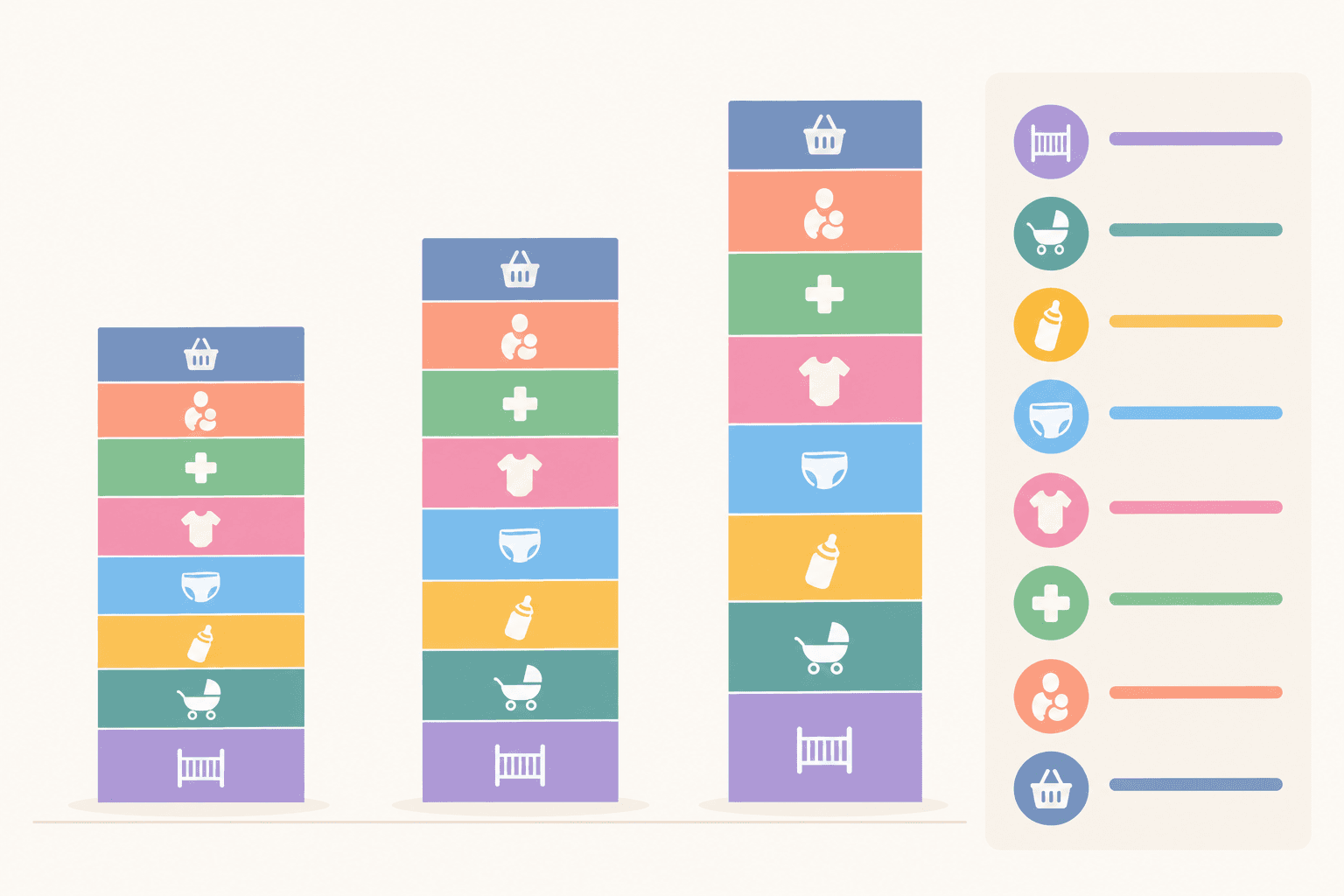
You can check this yourself: each column is a plain sum of its rows, with monthly figures multiplied by 12. One-off costs (nursery and gear) total R7,000, R17,000 and R36,000 across the three tiers. Everything else repeats or builds up through the year.
Assumptions behind the South Africa baby cost estimates
- Lean assumes public clinics (routine childhood immunisations are offered through public health facilities, so confirm the schedule with your clinic), breastfeeding with a few extras, and unpaid family childcare.
- Mid-range assumes a mix of private and public care and part-time childcare or domestic help at about R2,000 a month. Feeding assumes mixed feeding: about five tins of formula a month for roughly six months at around R250 a tin (R7,500), R1,500 of bottles and equipment, then about R6,000 for solids and a highchair.
- Premium assumes mostly formula (about seven tins a month at around R275, or R23,100), plus equipment and solids, full-time childcare at about R4,000 a month, and private care.
- Nappies are reconciled with the stage-by-stage estimate later on. Lean sits below it because of cloth or mixed nappies, and premium sits above it because of premium brands.
Prices shift by city, brand and store. A Cape Town crèche and a small-town one are not the same animal, so please swap in your own quotes.
Nursery and baby gear budget breakdown
Gear is the fun part, and also the easiest category to keep under control. These ranges are indicative planning allowances, not a live price list.
| Item | Lean | Higher-end | Buy new or second-hand? |
|---|---|---|---|
| Cot or cot bed | R2,000 | up to R8,000 | Second-hand can work if all parts and labels are intact and it's not damaged |
| Cot mattress | R700 | up to R2,500 | New is simplest, since you can be sure it's clean, firm and fits snugly |
| Changing mat or station | R200 | up to R800 for a mat, more for a dedicated unit | A mat on a stable surface you already own saves a lot |
| Storage or drawers | R500 | up to R3,000 | Second-hand is fine |
| Pram or travel system | R1,500 | R10,000+ | Good second-hand option if it's well maintained |
| Infant car seat | R1,000 | up to R5,000 | New, or from someone you trust with a known history |
| Baby carrier | R500 | up to R2,500 | Either, if straps and buckles are in good shape |
| Bath and accessories | R150 | up to R700 | Either |
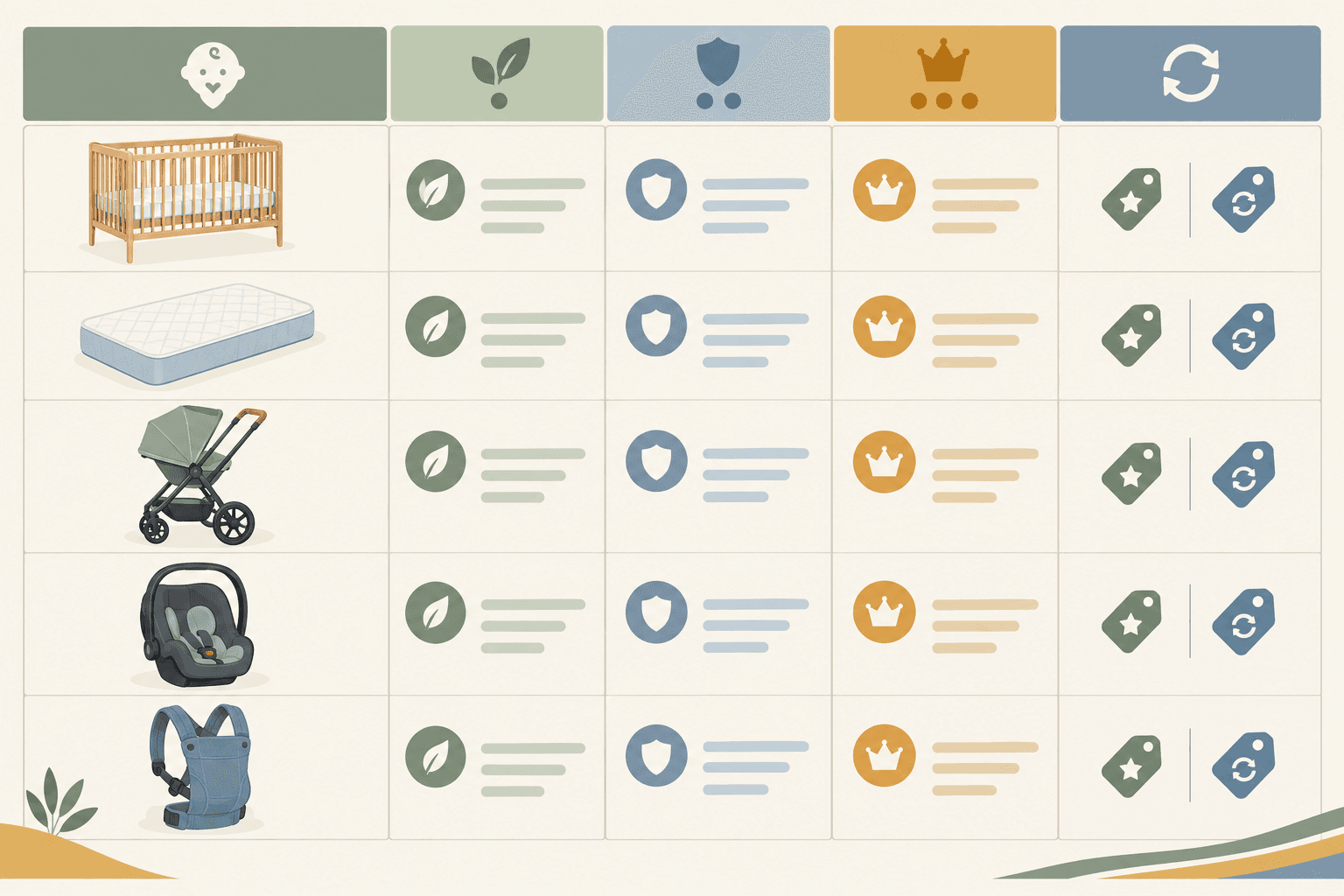
Here's how this connects to the big table. In the lean column, nursery (R3,000) is the cot, mattress and changing mat (R2,900). Gear (R4,000) is the pram, car seat, carrier and bath (R3,150), rounded up for linen and small extras. The premium column adds up the higher-end figures the same way: roughly R14,300 for nursery items and R18,200 for gear, rounded up for linen, delivery and extras. Mid-range sits between the two.
The six essentials alone (cot, mattress, mat, pram, car seat, bath) come to roughly R5,550 at lean prices, before linen, delivery or optional extras.
Where to spend and where to save on baby gear
Car seats come first. If your baby will travel by car, this is the one place I'd never cut corners. Buy new, or borrow only from someone who can vouch for its whole history. A used seat with unknown crash history, missing parts or unreadable labels isn't a bargain.
Mattresses are next. Safer sleep guidance is simple: a firm, flat surface with a fitted sheet, and no pillows, loose blankets or soft toys in the cot. Read your clinic's or paediatrician's advice too. It also tells you something about the budget: a basic cot and a good mattress are essentials, while a lot of the pretty cot accessories aren't.
Second-hand is great for clothing, bouncers, storage and some furniture. Check condition, recalls and missing parts.
Handmade newborn essentials that become keepsakes
This is where handmade baby products from local baby artisans shine. Think of a hand-stitched blanket, a wooden mobile, bedding in soft natural fabrics, or a stacking toy that outlasts three siblings. Prices vary by maker, and some cost more than mass-produced equivalents, but they often end up in a memory box.
Big-ticket gear is also what friends and family love to chip in on, which I'll come back to in the registry section.
Feeding, nappies and clothing costs in the first year
This is the section where budgets quietly leak.
Breastfeeding isn't free
Breastfeeding avoids routine formula purchases, which is a real saving. Still, many parents end up buying some of the following, depending on their circumstances:
- Nursing bras and breast pads
- Nipple cream
- A pump, plus milk-storage bags or bottles
- A steriliser
- Lactation support, if you need it
The World Health Organization recommends exclusive breastfeeding for the first six months, then introducing complementary foods while breastfeeding continues. Feeding plans vary, and no way of feeding your baby is wrong. The point is just to budget for the way you're actually feeding.
Formula feeding costs
Note the exact tin size and shelf price at your usual retailer, then update as your baby grows. The tin counts below are illustrative, because real use depends on your baby's age, appetite, tin size and how much you mix feeding. As a rough guide for a full year of formula:
- Five tins a month at R200 to R350 a tin comes to about R12,000 to R21,000.
- Eight tins a month at the same prices comes to about R19,200 to R33,600.
The mid-range feeding budget of R15,000 is lower than the full-year five-tin figure because it assumes formula for only about half the year (see the assumptions above). Add bottles and sterilising equipment, always follow the preparation instructions on the tin, and never stretch formula with extra water.
Starting solids
Around six months, a second wave of costs arrives: a highchair, bibs, weaning spoons, bowls, storage containers and either pouches or the ingredients for homemade purees. Solids don't replace milk at that point, so don't expect the formula spend to vanish. It tapers gradually.
Nappies, wipes and toiletries by stage
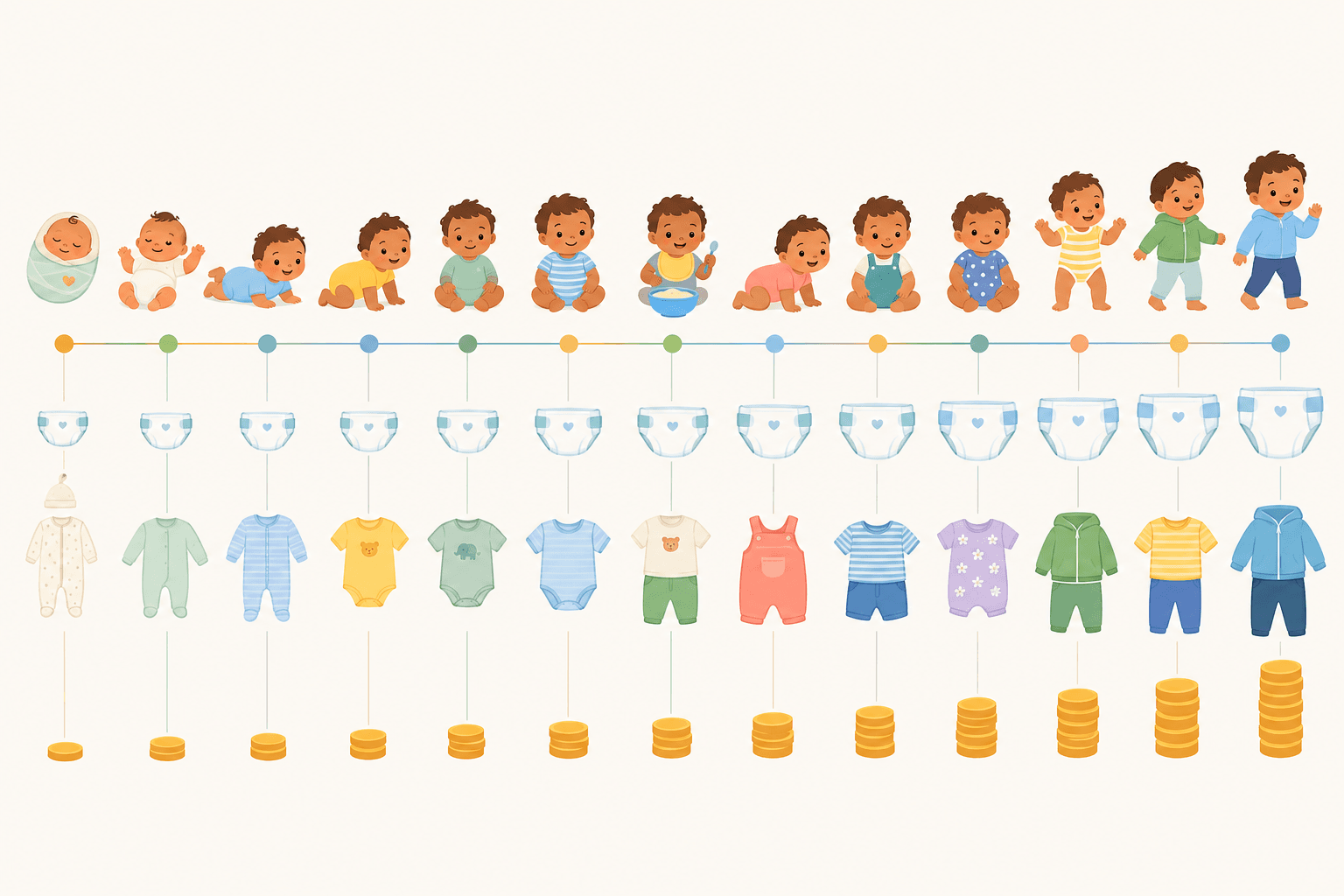
Newborns get through a lot, then usage settles. Eight nappies a day over a year is about 2,920 nappies, or roughly R7,300 to R14,600 at R2.50 to R5 each. With wipes and toiletries added, here's the monthly picture:
| Stage | Estimated monthly spend (nappies, wipes, toiletries) | Months | Stage total |
|---|---|---|---|
| Months 0 to 3 | R900 to R1,600 | 3 | R2,700 to R4,800 |
| Months 4 to 6 | R800 to R1,400 | 3 | R2,400 to R4,200 |
| Months 7 to 12 | R700 to R1,300 | 6 | R4,200 to R7,800 |
That works out to roughly R9,300 to R16,800 for the year, and the mid-range allowance of R13,000 sits comfortably inside it. Cloth nappies, or a mix, can bring this down.
Baby clothing costs by size band
Babies typically double their birth weight by around six months and triple it by about a year, so clothes don't last long. Clothing costs tend to be lumpy rather than monthly. As a starting point:
| Size band | Realistic starter quantity |
|---|---|
| Newborn | 4 to 5 bodysuits, 3 sleepsuits, 1 hat, a few pairs of socks |
| 0 to 3 months | 6 bodysuits, 4 sleepsuits, 2 cardigans or jerseys |
| 3 to 6 months | 6 bodysuits, 4 to 5 outfits, sleepsuits |
| 6 to 12 months | 6 to 8 outfits, sleepsuits, shoes or socks for crawlers |
My tip: buy fewer newborn items than you think, and put your money into the next size up. Some babies skip newborn sizes within weeks. Hand-me-downs work brilliantly for everyday clothes.
Hidden baby costs parents forget
I'm naming these gently, because knowing about them now is what stops them turning into panic later. 💛 Three of them (premiums, birth costs and reduced income) sit outside our totals, so add them separately.
- Medical excess and co-payments. Birth costs, out-of-network fees, paediatrician visits and any vaccinations your plan doesn't cover. Public clinics offer routine immunisations, but check your own scheme's benefits if you go private.
- Childcare and domestic help. Crèche deposits, nanny or au pair costs, and registration fees often come as a lump sum upfront.
- Reduced income. South African employees are entitled to four consecutive months of maternity leave, but employers aren't generally required to pay wages during it. Check your employer's benefits and your UIF eligibility before counting on an income, and plan for a lower-salary stretch.
- Load shedding extras. Backup lighting, power banks, and a way to keep bottles warm when the power's out at feeding time.
- Photography, announcements and baby shower costs. Small items that add up, especially if you're hosting.
- Birth registration logistics. Registering within 30 days is generally free, but travel to Home Affairs and time off work still cost something.
- Everyday add-ons. More laundry, a bigger boot, more frequent shopping trips, and baby-proofing once your little one starts crawling.
None of this is meant to scare you. Put a line for each in your budget, even a small one, and the surprises shrink.
How a shared baby registry can reduce your spending
The mechanism is simple. Your guests are going to spend money on baby shower gifts anyway. A baby registry points that spend toward things you genuinely need and spares you the fourth identical muslin set. The saving comes from the gifts, not the registry itself, but the registry helps those gifts land where your budget needs the help.
An illustrative baby registry savings example
Take the mid-range column. Say your setup costs are the nursery (R8,000), gear (R9,000) and newborn essentials like a starter wardrobe, bottles, a steriliser, bath items and first nappies (about R8,000). That's R25,000 of registry-friendly spend. Add roughly R8,000 for the first three months of nappies and feeding, and your early spend is about R33,000.
| Registry-friendly area | Mid-range cost | Share guests might cover (assumption) | Illustrative offset |
|---|---|---|---|
| Nursery | R8,000 | 25% to 50% | R2,000 to R4,000 |
| Gear (with group gifting) | R9,000 | 30% to 50% | R2,700 to R4,500 |
| Newborn essentials | R8,000 | 35% to 55% | R2,800 to R4,400 |
| Total | R25,000 | about R7,500 to R13,000 |
That's roughly 23 to 39 percent of the R33,000 early spend, and about 9 to 15 percent of the R86,000 mid-range year. The percentages in the table are my assumptions, not survey results. Your outcome depends on how many people gift, what they can afford and how thoughtfully you build the list.
How bababloom works
Full disclosure: I'm part of the bababloom team, so weigh this section with that in mind. The budgeting advice above works with any registry, or none at all.
bababloom is a registry platform for South African parents. You build your registry for free, adding products from local baby stores and baby artisans. You pay a one-time R199 only when you're ready to share it, so you can take your time first. Guests buy directly from each retailer's own website, which means prices, delivery and payment options are set by each store. You get one shareable list instead of juggling links across several shops.
Want to see the range? At the time of writing, the live example registry has 102 gifts from 31 stores, so you can browse what local choice looks like, from everyday newborn essentials to handmade pieces.
Giving beyond your own nursery
bababloom also partners with the Hatch Foundation. Guests can donate a R500 Hatch Bag of newborn essentials to a mother in need, so the generosity reaches past your own nursery. Some families add one to their list as a quiet way of paying it forward.
What a baby registry can and can't cover
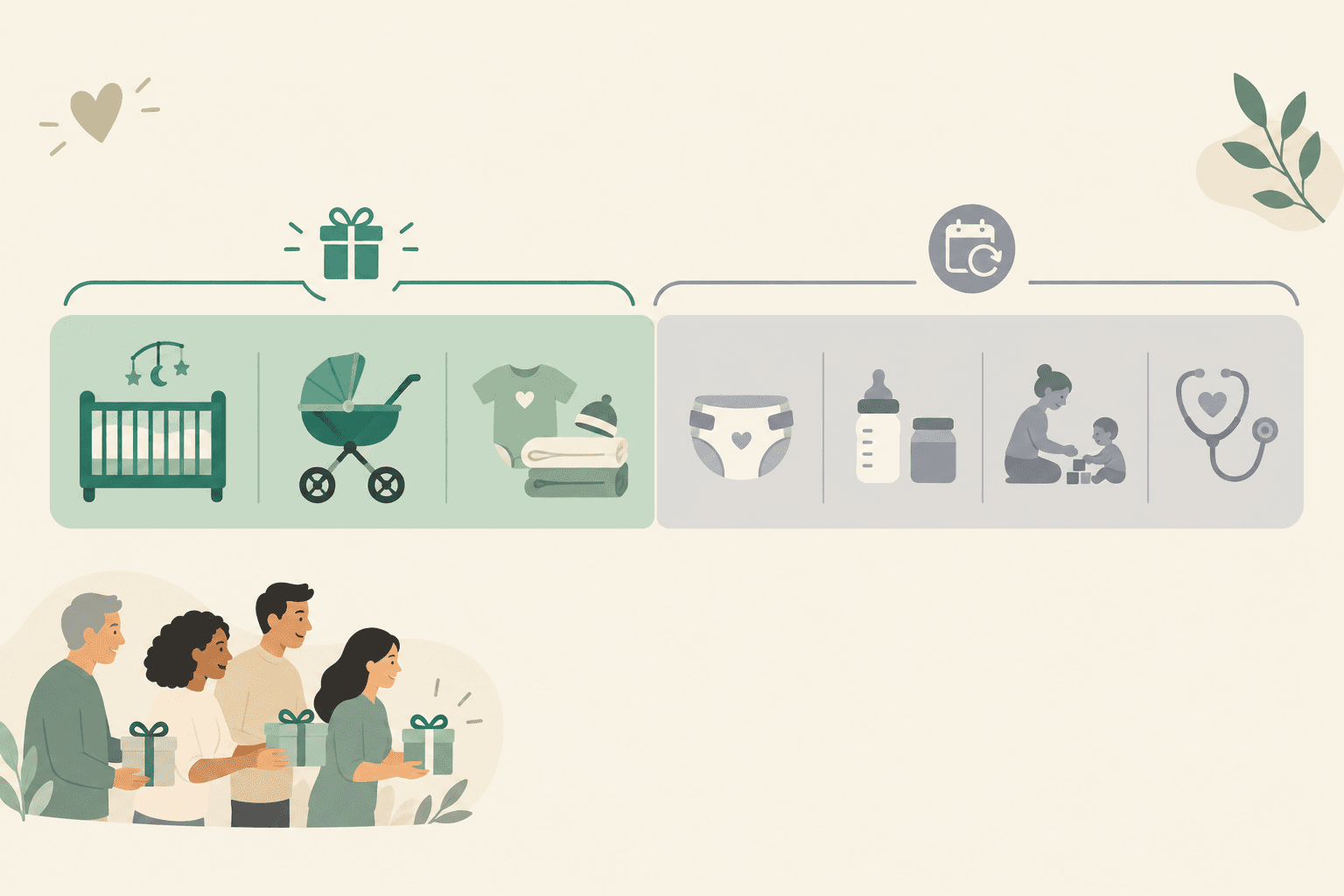
A registry offsets one-off and early costs. It won't cover childcare or monthly recurring spend. Aim it at the rows in your table where help matters most.
Gifting from the UK: making your Rand count
If you're a UK relative or friend, a local registry means you can see exactly what the parents need, and nobody has to post parcels across continents. A few practical tips:
- Convert before you choose. Rates move daily, so check the live rate. As an illustration only, at roughly R23 to the pound, R199 is about £9, R500 (a Hatch Bag, for example) is about £22, and a R100 to R300 gift is about £4 to £13.
- Test checkout early. Guests buy from each retailer's own South African website. Whether a store accepts UK cards, and whether it delivers to the parents' address, varies by retailer, so check at checkout rather than on the day.
- Expect bank fees. Your bank may add a foreign-transaction charge, so a slightly larger gift can be worth it.
- Pool with others. Group gifting on big items like a pram or car seat stretches pounds further and avoids a handful of small, unneeded presents.
- Ask the parents. If a store won't take your payment, they'll happily tell you which gifts are easiest to buy from abroad.
Smart ways to build a budget-friendly baby registry
- Use your budget table to pick your target categories. Decide which rows you most want help funding, typically gear, sleep and newborn essentials.
- Mix price points. Include small R100 to R300 items for guests with modest budgets, plus big-ticket gear that groups can chip in on.
- Add practical newborn essentials, not just the pretty things. Bodysuits, muslins, bottles and nappy-bag basics deserve space beside the wooden toys.
- Add a few local, handmade pieces you'll treasure. A blanket or mobile from a local baby artisan makes a lovely keepsake.
- Leave room for consumables. Guests often love giving nappies, wipes and toiletries, and they chip away at your recurring costs.
- Share early and keep it updated. Tell family sooner than you think you need to, especially those abroad, and update the list as hand-me-downs arrive and your needs change.
A simple monthly baby budget plan for year one
- Total your one-off costs from the tables, then subtract what you expect from a registry and hand-me-downs.
- Calculate your monthly recurring costs: nappies, feeding, toiletries, clothing replacements, childcare and transport.
- Add the exclusions: your annual medical scheme premiums, birth costs and any unpaid leave.
- Build a small buffer. Aim for roughly one month of baby costs set aside for surprises.
- Choose your two or three non-negotiables, such as the car seat and childcare, and stay flexible on everything else.
- Review at three and six months. Your baby's needs shift fast, and so will your numbers.
You don't need a perfect budget. You just need an honest one. Start with the table, change the numbers to fit your life, and let your village help where it can. 🌱
FAQs about baby budgeting in South Africa
How much does a baby cost in the first year in South Africa?
There's no official figure, and it varies widely. Our estimates run from about R23,000 (lean) to R165,000 (premium), and R60,000 to R120,000 is a sensible planning zone for a mixed approach with some paid childcare. That covers nappies, feeding, clothing, gear, out-of-pocket health costs and childcare, but not medical scheme premiums, birth costs or lost income. The biggest swing factors are childcare, medical cover and whether you buy new or second-hand.
What are the biggest hidden baby expenses?
Parents most often overlook medical excess and co-payments, childcare deposits, reduced income during maternity leave, and the steady monthly drip of nappies, wipes and toiletries. Replacing outgrown clothing and gear adds up faster than you'd expect, too.
Can a baby registry really save me money?
Yes, within limits. A registry won't cover monthly recurring costs like childcare, but it can fund a meaningful share of your nursery, gear and newborn essentials by directing gift spending toward what you need and avoiding duplicates. In our illustrative mid-range example, that was about R7,500 to R13,000. How much you save depends on how many people gift and how thoughtfully you build the list.
How does the bababloom baby registry pricing work?
You can build your registry for free and only pay a one-time R199 fee when you're ready to share it with friends and family. Guests then buy directly from the retailers' own websites, where prices, delivery and payment terms are set by each store.
Is it better to buy baby items second-hand to save money?
Often, yes, for items like clothing, bouncers and some furniture. For safety-critical items such as car seats and mattresses, new is the simplest choice because you know their history and condition. A blend of new, second-hand and gifted items usually works best.
I live in the UK and want to gift to family in South Africa. How do I make sure my gift is useful?
A registry with local South African stores is a great option. You can see exactly what the parents need and avoid duplicates. Prices are in Rand, so check the live exchange rate before you buy (R500 is roughly £22 at an illustrative R23 to the pound). At checkout, make sure your card is accepted and the store delivers to the parents' address, and allow for any bank foreign-transaction fee.
Baba Bloom Team
Author