What to Register For (and Skip) With Your Second Baby: A South African Reuse-vs-Replace Guide
Second Baby Registry: What to Reuse, Replace and Register For in the UK
Yes, it's completely okay to have a registry for your second baby. Here's the short version. Reuse sturdy gear in good condition, like your cot frame, pram and clothes. Replace anything that is worn, damaged, hygiene-sensitive or past its expiry date, such as teats, dummies and breast pump parts. Check carefully anything safety-critical, like car seats and cot mattresses. A car seat needs replacing if the manufacturer says so (after a crash, for example), if it's expired or damaged, or if you don't know its history. A mattress should be judged on its condition, fit and safer-sleep guidance. Then register for the gaps and upgrades you actually felt the first time round.
The rest of this guide shows you how to work it all out in one afternoon with a notepad and a cup of tea. ☕
Why Second-Time Parents Still Need a Second Baby Registry
Picture this. You open the loft hatch or the spare-room cupboard and there it is: the first-baby stash. The bouncer is faded, one pram wheel squeaks, and there's a bag of tiny vests that may or may not be the right size. A sinking thought creeps in: do we actually have what we need?
If that's you, you're in very good company. A second-baby registry is a small, practical tool, not a wish list for a mountain of stuff. It stops friends and family guessing, and stops them buying a third playmat when you already own one. Plenty of parents feel a pang of guilt about this, but a short, sensible list saves everyone the guesswork.
Things also look different the second time round. Your first baby might have been a summer newborn, and this one arrives in the depths of winter. Depending on the age gap, some gear may be too worn or outgrown, or still in use by your toddler. Your time has shrunk too, since there's already a small person demanding snacks. And the budget may be tighter, because two children is a different financial picture.
So instead of a from-scratch list, think of a smaller, gap-filling registry built around replacements, a few genuine upgrades and something special for the new arrival.
A Simple Reuse-or-Replace Checklist: Three Quick Questions
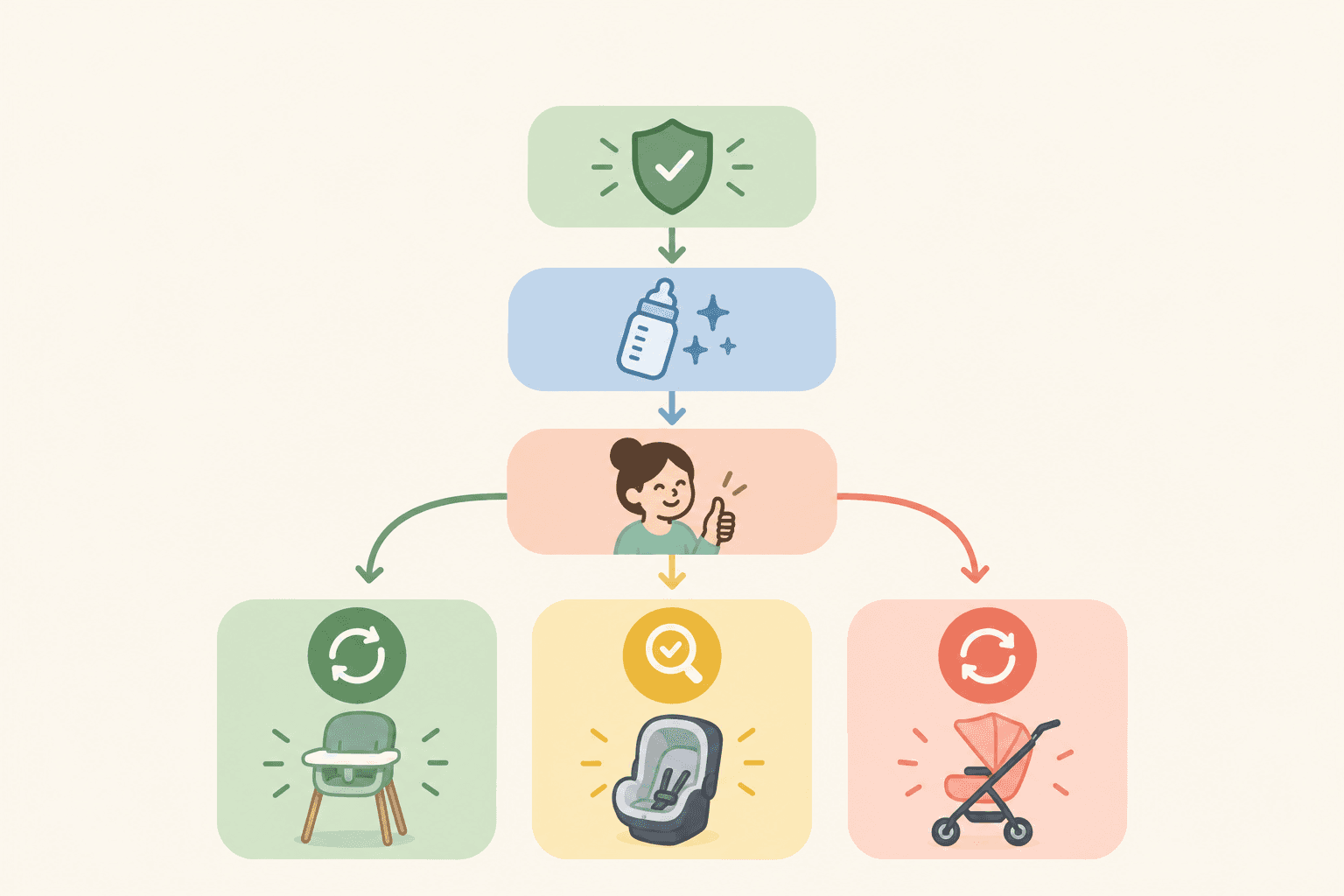
For every item in your pile, ask these three questions in order.
- Is it safety-critical? Think car seats, cot mattresses, harnesses and anything with a safety standard, a recall risk or an expiry date. If yes, check the label, the manual and the manufacturer's guidance before you reuse it.
- Is it hygiene-sensitive? Teats, dummies, breast pump parts and tired bibs all fall here. If yes, replace anything worn, and follow the manufacturer's replacement guidance for the rest.
- Did it work for you the first time? If you hated it, don't reuse it, and don't register for the same thing again.
A quick worked example
Say your pram still rolls beautifully, but the wheels are worn flat and the fabric is faded and a bit stiff. Is it safety-critical? Partly. The brakes, harness and folding locks matter, so you check them and they all work perfectly. Is it hygiene-sensitive? Not really. Did it work for you? Yes, you loved it.
Verdict: keep the pram, and put replacement wheels or a fresh canopy on your registry instead of a whole new pram. That's a much smaller ask, and it's kinder to your budget too.
Do the audit properly
Pull everything out and sort it into four piles:
- Keep: sound, clean and ready to go.
- Check: needs inspecting, or the label and manual need reading.
- Replace: worn, expired, damaged or hygiene-sensitive.
- Pass on: things you hated or never used.
Be honest about that last pile. Admitting what you didn't use the first time saves more money than any sale ever will.
Baby Items That Are Usually Safe to Reuse
Good news first. A lot of your first-baby gear can happily do a second tour of duty, as long as it's clean, intact and not subject to a recall:
- Cot or bassinet frame: Reuse it if it's stable and complete, with no loose screws, cracks or missing parts. Don't use one that's been modified or recalled, and avoid drop-side designs altogether.
- Pram or stroller frame: Check the brakes, harness, buckles, wheels, folding locks and fabric. A replacement canopy or set of wheels is often far cheaper than a new pram. Also check the seat reclines suitably for a newborn, following the manufacturer's instructions.
- Clothing and blankets: Wash everything, then sort by size and season. Look for loose threads, damaged fasteners and drawstrings, and only fill the gaps.
- Baby carriers and wraps: Inspect stitching, buckles and straps for wear and follow the maker's instructions.
- Playmats, bouncers and toys: Look for damage, small detachable parts, sharp edges and worn straps, then wipe down thoroughly.
- Muslins, burp cloths and swaddles: Usually fine if they're still soft and intact, though a handful of fresh ones is a lovely, affordable registry item.
Hand-me-downs from friends are great too, as long as you know the item's history. Before reusing anything, check for recalls on the manufacturer's website and on the UK government's product safety alerts and recalls pages. If something has a recall, a crack or a missing part, take it out of rotation.
Baby Items to Replace or Check Carefully
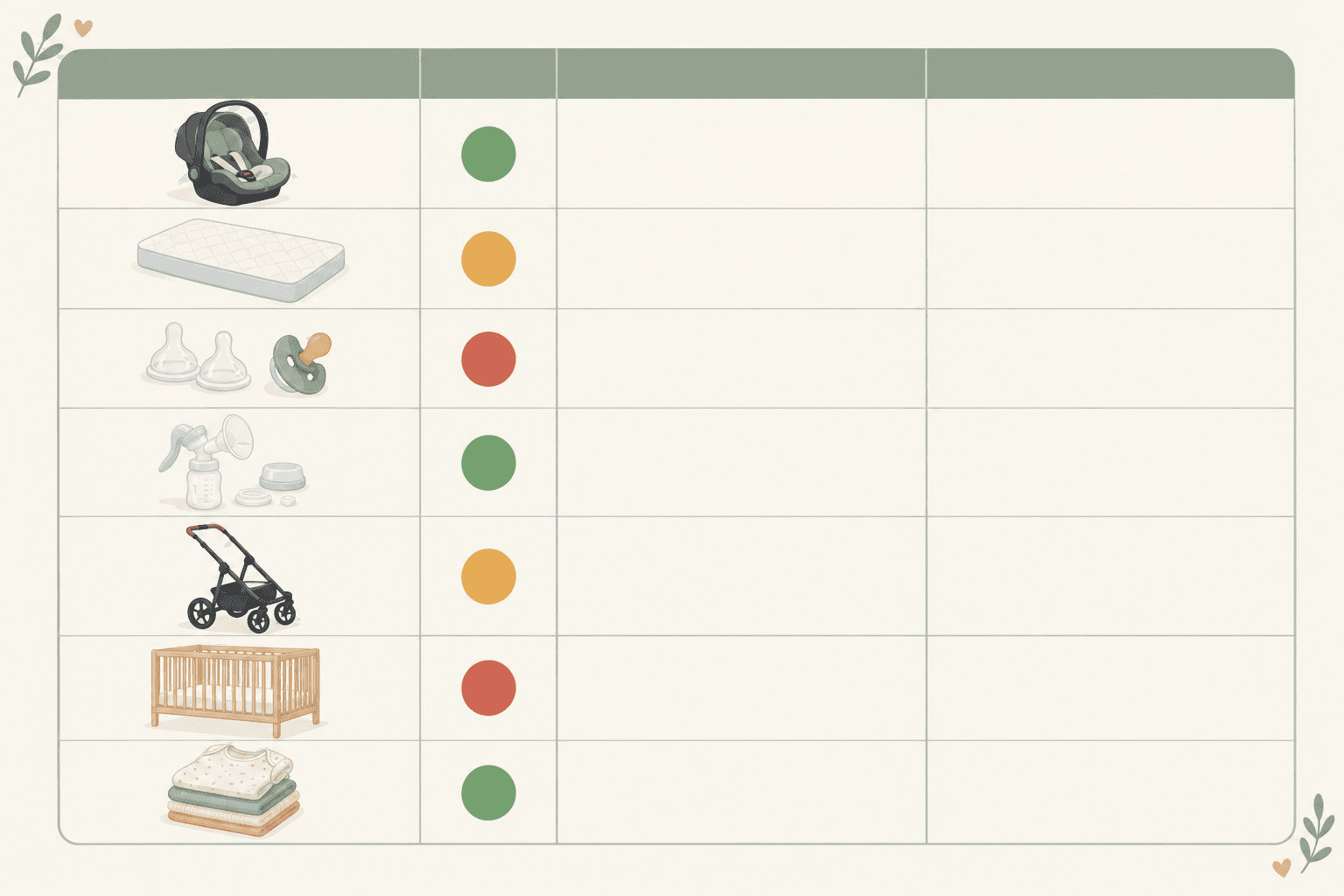
Now for the part where we spend in the right places. The aim isn't to spend more, just to spend where it counts. The table sorts items into three groups: replace, check first, and usually fine to reuse.
| Item | Verdict | Why | What to check |
|---|---|---|---|
| Car seat | Check first; replace if expired, damaged, crashed (per manufacturer) or history unknown | Materials age and safety standards evolve | Crash history, manufacturer's expiry or 'use by' date, recalls, approval label (UN R44/04 or R129), manual present, suits a newborn |
| Cot mattress | Check first; replace if damaged, unsuitable or poorly fitting | A firm, flat, well-fitting mattress matters for safe sleep | Sagging, stains, tears, dampness, gaps at the cot edges, a clean waterproof cover |
| Teats, dummies, sippy spouts | Replace when worn, and on the manufacturer's schedule | They go in baby's mouth and degrade | Cracks, tears, stickiness, thinning, discolouration |
| Breast pump parts | Replace worn parts; check the pump | Valves, membranes and tubing wear, which affects hygiene and performance | Manufacturer's guidance; don't share personal-use pumps |
| Bibs, face cloths, towels | Replace tired ones | Stained, thin or stiff items work less well | Thin patches, stiffness, lingering stains |
| Monitors, harnesses, cracked plastic | Replace if damaged | Safety gear needs to be reliable | Fraying cables, worn straps, cracks |
| Pram or cot frame | Usually reuse | Sturdy when well maintained | Brakes, locks, screws, recalls |
| Clothing | Usually reuse | Washable and durable | Fasteners, loose threads, size and season |
Cot mattress: when should you replace it?
Safer-sleep charities such as The Lullaby Trust generally say a new mattress is ideal, but a used one can be acceptable if it passes every one of these checks. It should be firm and flat, clean and dry, free from tears or sagging, a snug fit in the cot with no gaps, and have an intact waterproof cover. If it fails any check, or you're unsure of its history, replace it. Don't use toppers or soft bedding to make up for a tired mattress.
Feeding gear: what should you replace?
There's no single replacement timetable, because it varies by brand and how often you use things. Start with the packaging or manual. Many manufacturers suggest replacing teats and dummies every few weeks to a couple of months. Then add your own checks: replace on the spot if you see cracks, tears, stickiness, swelling, thinning or discolouration. Breast pump parts like valves, membranes and tubing wear out too, so follow your pump maker's recommendations, and don't share a personal-use pump.
Do I Need a New Car Seat for My Second Baby?
Here's the straight answer: not always, but check these things before you decide.
- Has it been in a crash? Follow the manufacturer's instructions. Some brands say replace after any crash, even a minor one, and their word takes priority over general rules of thumb.
- Is it within its expiry date? Look for a date stamped on the seat or shell, or usable-life information in the manual. This varies by manufacturer and model.
- Is its history fully known? If you can't vouch for every journey the seat has made, or it's from a stranger, it's a poor reuse candidate.
- Does it suit a newborn and your car? Check the weight and height limits, the approval label (UN R44/04 or R129, also known as i-Size), that the manual is present, and that it installs properly in your vehicle.
Why do expiry dates exist? Materials age and safety standards move on, so a seat that looks fine can still be past its safe life. If the date or history is unclear, contact the brand.
If your toddler is still in their seat, you'll need a second one anyway, and please don't move your older child into a less suitable seat to free one up. In the UK, children generally need a child car seat until they're 12 years old or 135cm tall, whichever comes first, so check the current rules on gov.uk. This is general guidance, and the seat manufacturer's instructions always come first.
A car seat also makes a great group gift. Grandparents or a few close friends can chip in together on something big that really matters.
Gender-Neutral Baby Registry Picks for Baby Number Two
If you don't know whether you're welcoming a brother or a sister (or you do, and the first baby is the opposite), gender-neutral gear lets you reuse far more from baby one, and it keeps your cupboard calm.
Neutral staples worth having:
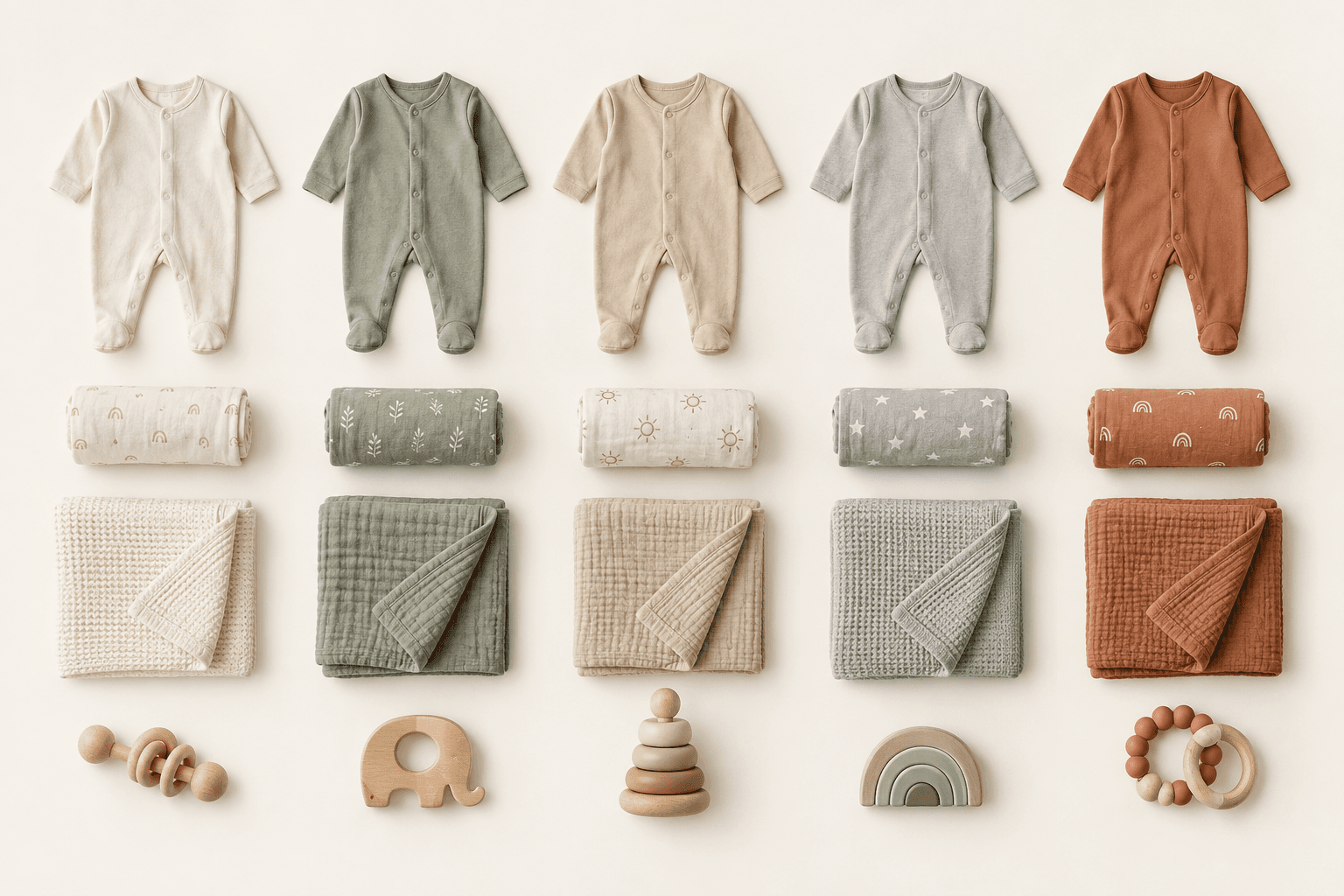
- Sleepsuits and vests in soft, earthy tones
- Swaddles, hats and blankets
- Classic prams and timeless play gear
Keep your palette simple. Two or three shades is plenty, so everything mixes and matches. Oat, sage, sand, soft grey and warm terracotta all go well together.
Make baby two feel special
Here's something I love: register for one thing that's just for this baby. Independent makers and small UK brands sell knitted blankets, wooden toys and personalised keepsakes. These feel special rather than like leftovers, and they stop baby two's story becoming one long hand-me-down. 💛
Worthwhile Upgrades for Your Second Baby Registry
The second time round, you know things. You know the pram that felt like pushing a small tractor, the sleep setup that never quite worked, and the changing bag that couldn't cope with a hands-full life. Let those frustrations guide your upgrades:
- A travel-friendly pram or a second-child accessory, like a ride-on board for your toddler
- Sleep aids that solve the problem you actually had
- A changing bag built for life with two
- Good feeding equipment, if feeding was the bit that tripped you up
- A small gift 'from the baby' for the big sister or brother, so your older child feels included
- Time-savers such as nappy subscriptions or meal-prep help, if retailers on your list offer them
My rule of thumb: fewer, better things. Favour quality brands built to last long enough for a possible baby number three.
Baby Registry Checklist: Newborn Essentials for Baby Number Two
Here's the step-by-step version, and the one baby registry checklist you need.
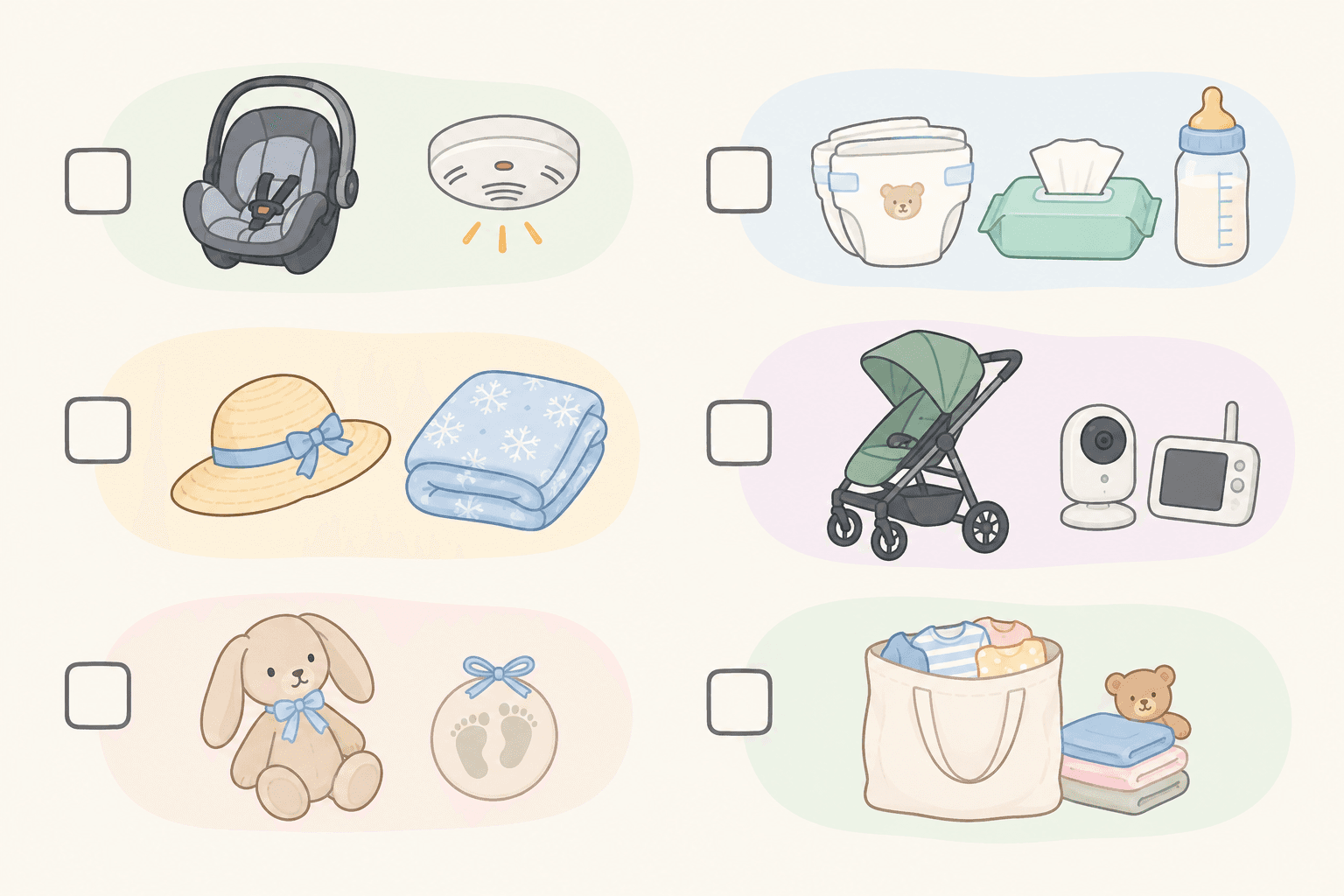
- Audit what you have. Sort into keep, check, replace and pass on.
- List safety and hygiene replacements first. That means a car seat (if needed), a mattress (if it fails the checks), teats, dummies and pump parts.
- Add seasonal newborn essentials. For a winter baby, think warm layers and blankets. For a summer baby, think light cotton and sun protection.
- Add one or two real upgrades from your 'wish I'd had that' list.
- Add something personal for baby two, like a handmade keepsake, and a gift 'from the baby' for your older child.
- Optional: add a charity donation option if your registry platform offers one, for guests who'd like to give something that matters.
Building a Smaller, Smarter Second Baby Registry
Aim for roughly 15 to 30 items. A shorter list is easier for guests to scan and easier for you to feel good about. Whichever registry service you use, look for one that lets you add products from several retailers, share a single link, and mark items as bought so nobody doubles up. Check how and where guests pay, and whether there are any fees, before you share it.
Pricing your list so everyone can join in
Mix your price points so every guest can contribute comfortably:
- Small (about £5 to £25): muslins, teats, a small toy, a bib set
- Mid-range (about £25 to £100): a cot mattress, a changing bag, a baby carrier, sleepwear sets
- Group gifts (£100 and up): a car seat, a pram upgrade or a sleep setup that friends and family can chip in on together
If you're planning a baby shower for number two (often called a 'sprinkle'), keep it low-key. A smaller registry suits it perfectly: a relaxed afternoon, a few friends and some tea and cake.
FAQs About Second Baby Registries
Is it okay to register again for a second child?
Absolutely. Many parents create a smaller registry for baby number two to cover replacements, upgrades and anything they didn't have first time. It also helps friends and family who want to give a gift and would otherwise have to guess.
Do I need a new car seat for my second baby?
Not necessarily. Replace it if the manufacturer's instructions say so (for example after a crash), if it's past its expiry date, if it's damaged, or if you don't know its full history. Also make sure it suits a newborn and fits your car. Always follow the manufacturer's instructions, and avoid second-hand seats with unknown history.
What baby items expire or wear out?
Car seats often have a manufacturer's expiry date. Teats, dummies and breast pump parts wear out and should be replaced according to the manufacturer's guidance, and straight away if damaged. Cot mattresses can sag or become damaged, and harnesses, bibs and towels also wear over time. Check labels and manuals for specific guidance.
Can I reuse my first baby's cot and pram?
Often yes, provided they're structurally sound, with no cracks, loose parts or worn brakes and harnesses, and no outstanding recalls. The mattress needs its own check: it should be firm, flat, clean, dry, undamaged and a snug fit, or be replaced.
How big should a second baby registry be?
Smaller than the first time. Many parents find 15 to 30 well-chosen items is plenty, focused on safety replacements, genuine upgrades and a few special items for the new baby.
What are good gender-neutral items for a second baby?
Soft neutral sleepsuits, swaddles, blankets, wooden toys and timeless handmade pieces from independent makers. These work whether you're having a boy or a girl and blend easily with items you already own.
Baba Bloom Team
Author